iOS actually runs on a series of Android devices, even the Surface Duo 2 is present, but the biggest question is: What for?
Executive Briefing
Synthesized and verified with gemini-2.0-flash-thinking-exp
“**The HackiOS open source project does not use a clone or emulator interface, but brings Apple's ope”
Key Takeaways
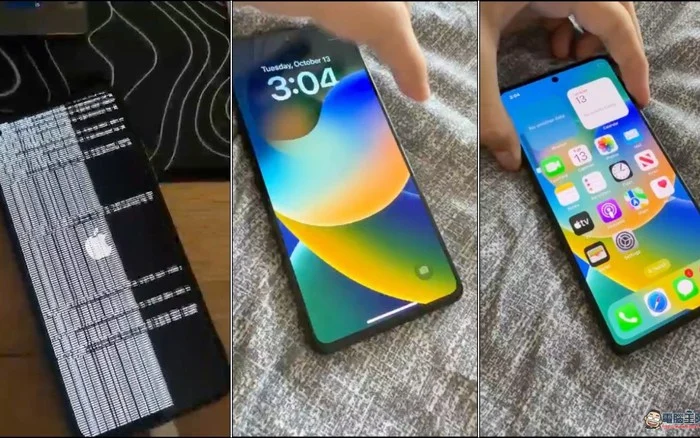
- 1.**The HackiOS open source project does not use a clone or emulator interface, but brings Apple's open operating system kernel to Android hardware, leading to a wave of testing on a series of devices.** A Xiaomi Mi 10 Ultra shows the iPhone's lock screen, swipes up to go to the iOS 16 home screen, opens Safari and the Photos app.
- 2.This is not an imitation interface layer, but the original iOS 16.5 running directly on Xiaomi hardware.
- 3.iOS 16.5 home screen displayed on Xiaomi Mi 10 Ultra The foundation of this performance is HackiOS, an open source project posted by independent programming group OOSEX GANG to GitHub on October 22.
The HackiOS open source project does not use a clone or emulator interface, but brings Apple's open operating system kernel to Android hardware, leading to a wave of testing on a series of devices.
A Xiaomi Mi 10 Ultra shows the iPhone's lock screen, swipes up to go to the iOS 16 home screen, opens Safari and the Photos app. This is not an imitation interface layer, but the original iOS 16.5 running directly on Xiaomi hardware.
iOS 16.5 home screen displayed on Xiaomi Mi 10 Ultra
The foundation of this performance is HackiOS, an open source project posted by independent programming group OOSEX GANG to GitHub on October 22. The team brings XNU, the operating system kernel for which Apple has long published the source code, to Android phones. The rest of iOS 16.5, from the home screen to accompanying applications, remains the same as the Apple release. The code repository does not contain any Apple files. Users must download the official iOS recovery file from the company's server and extract it on their computer.
The team's main tester is the POCO X5 Pro 5G. The Mi 10 Ultra, using the Snapdragon 865 chip, is a branch made by another independent developer on the HackiOS platform. According to the author's description, the October 24 version can run touch and draw the interface using GPU. The October 29 version adds Chinese, Wi-Fi, Bluetooth, sound, vibration, battery charging control and data saving after reboot. These descriptions have not been verified by a third party.
The phone is not overridden with Android. The device loads iOS into RAM via USB cable, so when restarted, the Xiaomi device returns to Android as before.
Xiaomi Mi 10 Ultra runs iOS 16
The original HackiOS version on POCO X5 Pro has many shortcomings. The group said that mobile network, Bluetooth, App Store and Apple ID login are not available, and the device only discharges the battery but cannot charge. The team also emphasized that this is a research test bench, not an operating system for daily use. The feature sheet of the Mi 10 Ultra branch does not list mobile networks or calls.
Mi 10 Ultra is not the only case. About a week ago, developer dipa-studio's ios-sweet project brought iOS 16.7.16 to Redmi Note 10 Pro and booted to the home screen. From there, the branches expanded to Redmi Note 12, Nothing Phone (3a), Pixel 4, Galaxy S7 and many others. A clip on Redmi Note 12 exceeded 2 million views on social network X.
Last weekend, the SmuOS developer went even further by booting iOS 26.5.2 on the Surface Duo 2, Microsoft's two-screen Android phone that has stopped supporting it. The operating system is displayed on both screens and receives touch, but the device identifies itself as iPhone 17 Pro Max, and Wi-Fi and Bluetooth information displays N/A.
Most projects choose iOS 16 instead of the new version, because the community believes that Apple's security layer in these versions is relatively easier to overcome. What SmuOS can do with iOS 26 shows that the new version is not impossible, just much more difficult.
The question many programmers ask is why bother installing iOS on Android devices? The answer is close to the reason why techies install Doom games on pocket computers, refrigerators or pregnancy tests: because no one has done it yet. Some people see additional practical value, in having a completely open iOS environment for research that the original iPhone does not allow.
The speed of this wave also makes the community discuss the role of AI. Some projects' documentation mentions programming assistants like Claude Code, Codex and Gemini, while the PixeliOS team says many of the codes were written by AI agents. There is currently no data showing how much AI contributes to each port.
Users need to be careful with the associated risks. Some ports install into data partitions and wipe Android data. Apple's security layers are turned off or replaced with fake copies, so the author advises not to save personal information on the device. Many of the "HackiOS" download links in circulation are fake. The HackiOS homepage also promotes the $HackiOS community token on the BNB Chain network, charging a 1% fee per transaction to fund development. Regarding copyright, iOS is only licensed to run on Apple hardware, so these projects are still experimental in a gray area.
As of October 29, the 128 GB memory section on the Mi 10 Ultra branch was still labeled experimental by the author. To try, users need a computer running Linux, a phone that has the bootloader unlocked and builds the system itself from Apple's recovery file.