Cisco integrates Claude Mythos into its enterprise AI defense platform
Cisco has integrated Claude Mythos reasoning technology into its Cisco AI Defense system at the Cisco Live Melbourne 2026 event to support enterprise AI agent security testing.
Global intelligence on artificial intelligence and computing
Query across our knowledge base of synthesized technology dispatches

Cisco has integrated Claude Mythos reasoning technology into its Cisco AI Defense system at the Cisco Live Melbourne 2026 event to support enterprise AI agent security testing.

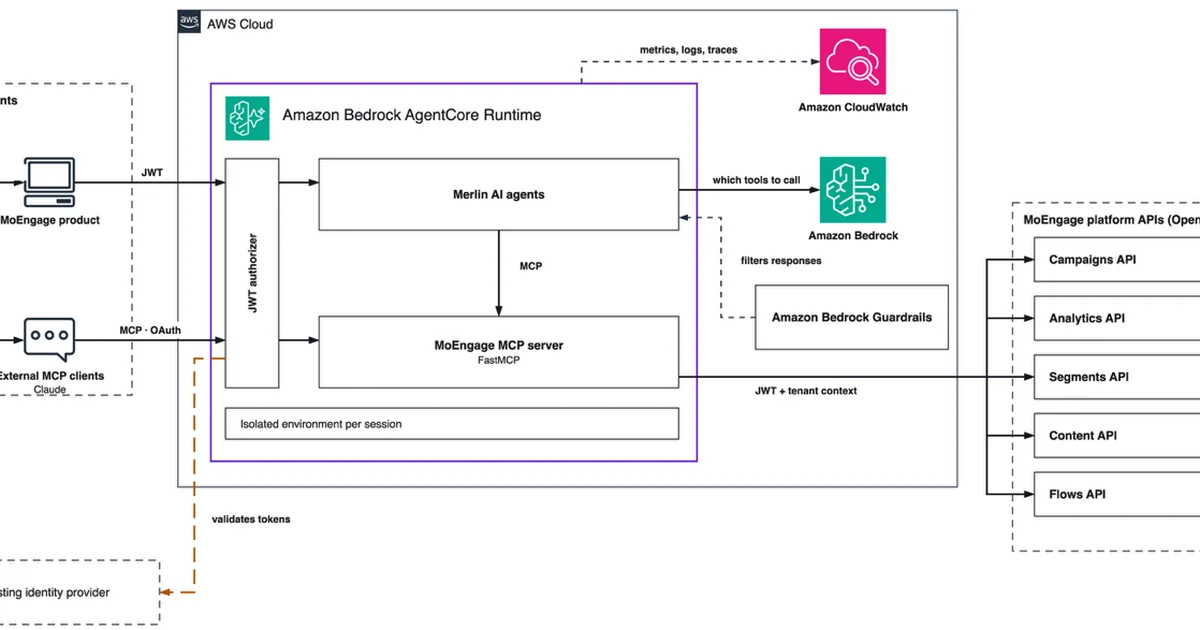
MoEngage developed its Merlin AI assistant system by converting existing platform APIs into Model Context Protocol tools hosted on Amazon Bedrock and AgentCore runtime.

New artificial intelligence models are helping developers and researchers build complex robot simulations in mere hours instead of weeks. The technology combines three-dimensional spatial reasoning with specialized software to automate behavioral training.

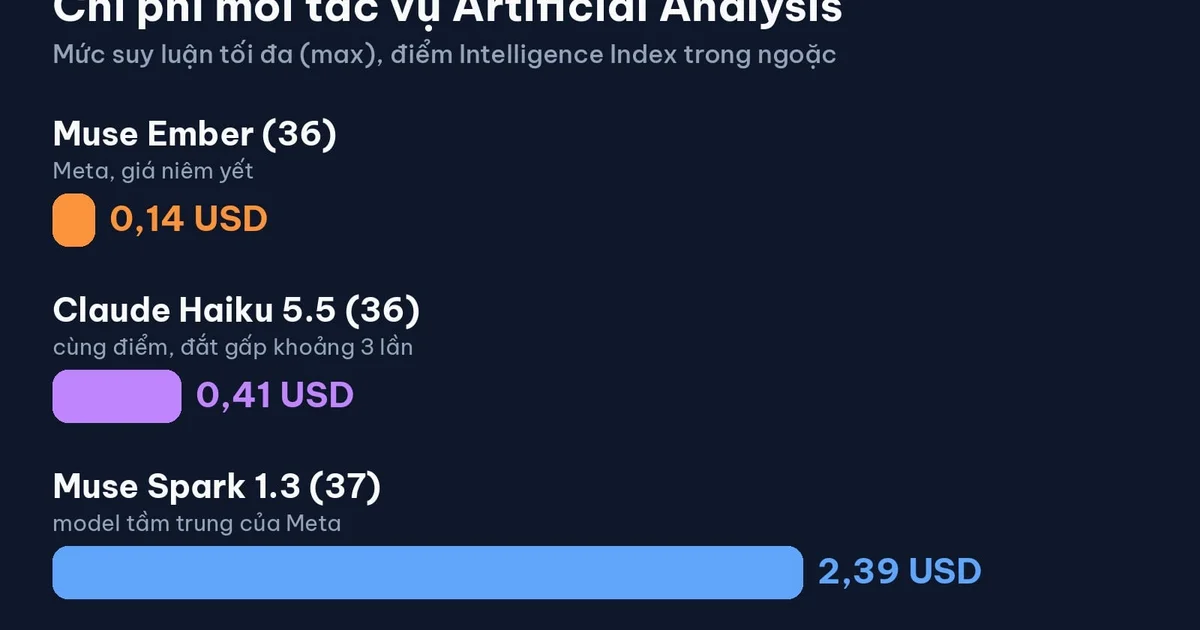
Meta has developed Muse Ember, a multimodal reasoning model featuring a one million token context window built for high-volume agent tasks. The model is hosted exclusively on Meta infrastructure at a significantly lower cost per task than competing systems.

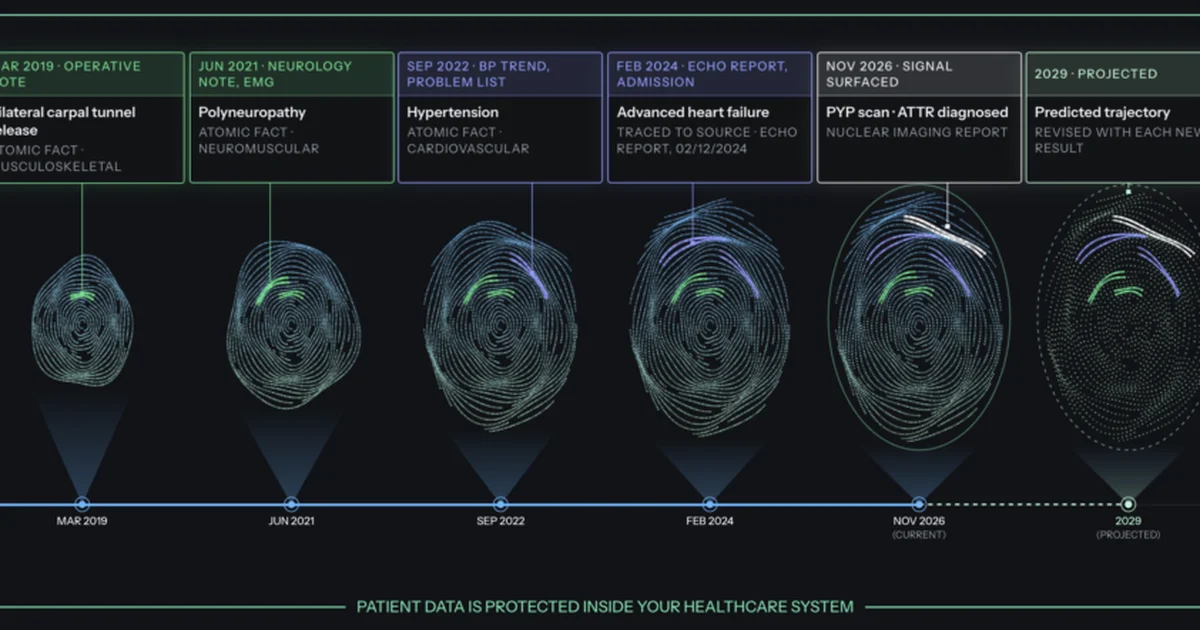
Dyania Health built a clinical reasoning engine designed to parse decades of patient records and accelerate hospital chart reviews. The technology was recently deployed by Cleveland Clinic in a study examining thousands of heart valve patients.

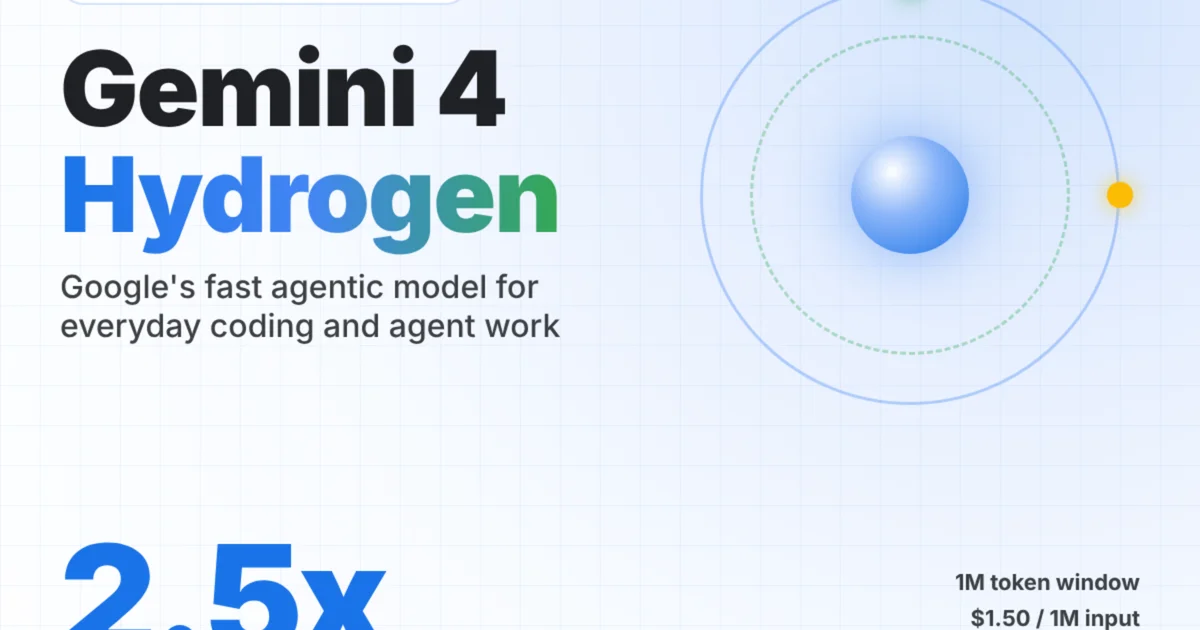
Google has released the Gemini 4 Hydrogen artificial intelligence system, delivering significantly faster speeds than the previous generation for coding and automation tasks. The model features a unified one-million-token context window and four customizable reasoning levels.

Inference bills on Amazon Bedrock can continue to climb after prompt tuning due to request-level choices. Engineers can optimize costs without changing models by adjusting cache duration, service tiers, reasoning effort, and output token limits.

On November 9, 2026, Meta officially introduced Muse Ember, its smallest model yet, delivering performance matching Claude Haiku 5.5 on Artificial Analysis at one-third of the cost.

Google has officially released Gemini 4 Carbon, a frontier artificial intelligence model designed for complex reasoning, multi-agent workflows, and open-ended scientific research. The model is now available to developers and enterprises through the application programming interface.

Anthropic has introduced Mythos 5.2 and Fable 5.2 featuring faster processing speeds and lower operating costs than their predecessors. The company enforces strict vetting for the Mythos model while widely distributing Fable to power-users.

Anthropic has released the Claude Fable 5.2 and Claude Mythos 5.2 artificial intelligence models with notable improvements in coding, reasoning, and cybersecurity. These systems demonstrated superior execution in multi-stage simulated cyberattack benchmarks.

Artificial intelligence company Anthropic has introduced two new model versions named Claude Fable 5.2 and Claude Mythos 5.2 designed to tackle complex technical problems. These systems are reported by the developer to feature superior programming, reasoning and image processing capabilities compared to their predecessors.

Anthropic has launched Mythos 5.2 and Fable 5.2 featuring lower costs and faster inference speeds for enterprise users. The release follows a third party assessment highlighting potential recursive self improvement risks.

Thinking Machines Lab has released Inkling 2 Small, the first model of its second Inkling generation. The Inkling 2 Small model is a sparse Mixture-of-Experts (MoE) with 594B total and 17B active parameters. It accepts text and images, and supports variable reasoning effort.

AI agents do more than generate answers. They search for information, query databases, write and test code and take action. Each of those steps relies on a CPU, with agents moving between GPU reasoning and CPU execution throughout a task.

webAI has released TwIL-8B, an 8.8B reasoning model for math, code and instruction following. The TwIL-8B reasoning model is post-trained from IBM’s Granite 4.2 8B. Weights are on Hugging Face under a non-commercial license.

### Tencent releases Hy4, powerful frontier LLM introducing visual understanding and computer use Tencent Holdings Ltd. today introduced Hy4, a new large language model that adds computer-use capabilities for the first time, using advanced visual understanding, reasoning and tool-calling to deliver long-horizon agentic performance. The company said the model marks a significant leap in performance over its Hy4 Preview, which arrived August 28, weighing in at 770 billion parameters with 49 billion active parameters.

### Exclusive: Cogent Security’s VR-1.1 model outscores Claude Code and Codex on vulnerability repair Vulnerability management startup Cogent Security Inc. today released VR-1.1, a new version of its frontier reasoning model that writes fixes for newly disclosed software vulnerabilities. On a public repair benchmark, the model outscored Anthropic PBC’s Claude Code and OpenAI Group PBC’s Codex.

Gemini 4 Argon marks a step change in physical understanding, code generation, and visual-semantic reasoning—unlocking new workflows across the robotics stack and accelerating progress toward physical AGI.

Step-by-step guide to running DeepSeek-R2 reasoning weights on personal GPU workstations with zero data leaks.

Gemini 4.0 Argon marks DeepMind’s flagship breakthrough for late 2026, pairing parallel speculative reasoning with an active 10M token window that achieves 92.4% accuracy on the OSWorld computer-use benchmark.

Learn how to eliminate hallucinations and achieve 99% code accuracy using a 4-step sequential prompt chain tailored for Gemini 4.0 Argon and Claude 4 reasoning models.

The round elevates Anthropics valuation to $60 billion, fueling Claude 3.7 deployment featuring dynamic switching between sub-second latency and deep deliberative reasoning.

The o3 model achieves a record-breaking 87.5% score on the ARC-AGI benchmark, introducing real-time self-verification before finalizing answers, signaling a new era for automated scientific discovery.