Amazon uncovers automated AI campaign targeting LiteLLM and Dify for API keys
Executive Briefing
“Amazon reported that automated AI agents have been hunting for vulnerabilities in...”
Key Takeaways
- 1.Automated AI agents have hunted for weak spots in internet-exposed AI applications such as LiteLLM, One API, and Dify to steal stored AI provider keys.
- 2.Amazon's threat intelligence team captured the records using decoy servers and assessed with moderate confidence that the agents ran on an open-source penetration testing tool named ARTEX.
- 3.The captured records list targets including LLM gateways and proxies such as One API and New API, alongside AI app builders like Dify, Langflow, and RAGFlow.
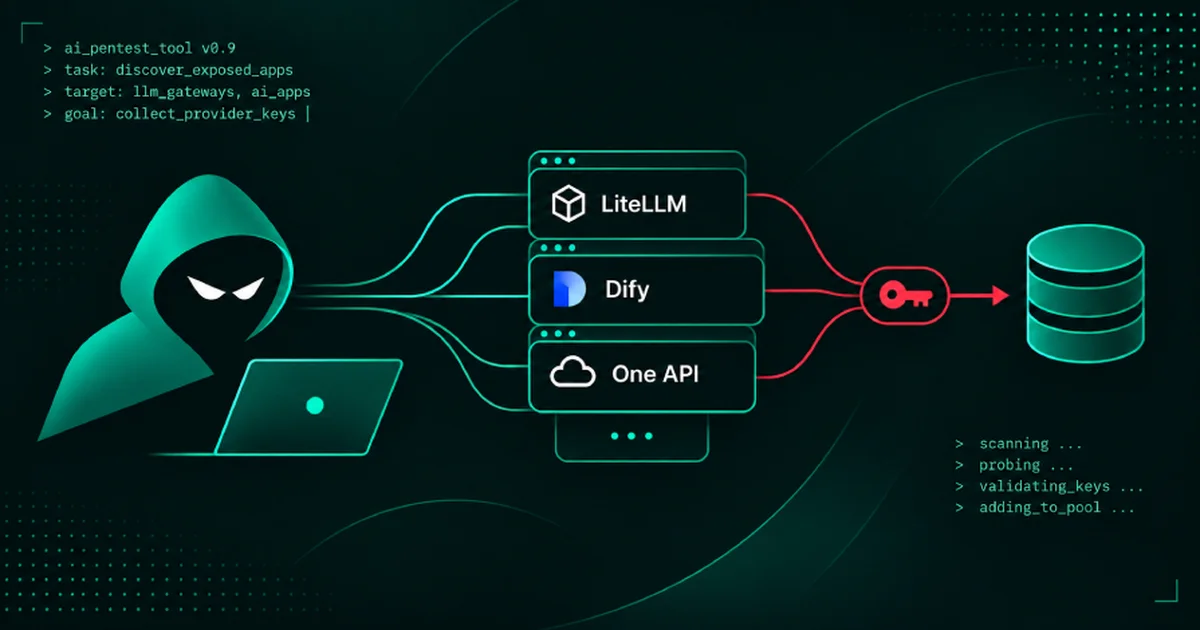
Amazon reported that automated AI agents have been hunting for vulnerabilities in internet-exposed AI applications such as LiteLLM and Dify to harvest provider keys. The campaign leverages an open-source penetration testing tool named ARTEX to exploit default configurations and unpatched flaws.
Key Developments and Technical Context
Automated AI agents have hunted for weak spots in internet-exposed AI applications such as LiteLLM, One API, and Dify to steal stored AI provider keys.
Amazon's threat intelligence team captured the records using decoy servers and assessed with moderate confidence that the agents ran on an open-source penetration testing tool named ARTEX.
The captured records list targets including LLM gateways and proxies such as One API and New API, alongside AI app builders like Dify, Langflow, and RAGFlow.
Strategic Analysis and Industry Implications
The deployment of automated agents in cyberattacks demonstrates a substantial increase in speed and persistence, while the underlying techniques rely on familiar misconfigurations and missing authentication rather than novel exploits.
Outlook and Key Factors to Watch
Amazon has not been able to independently verify the operational outcomes reported directly within the AI agents' own captured logs.