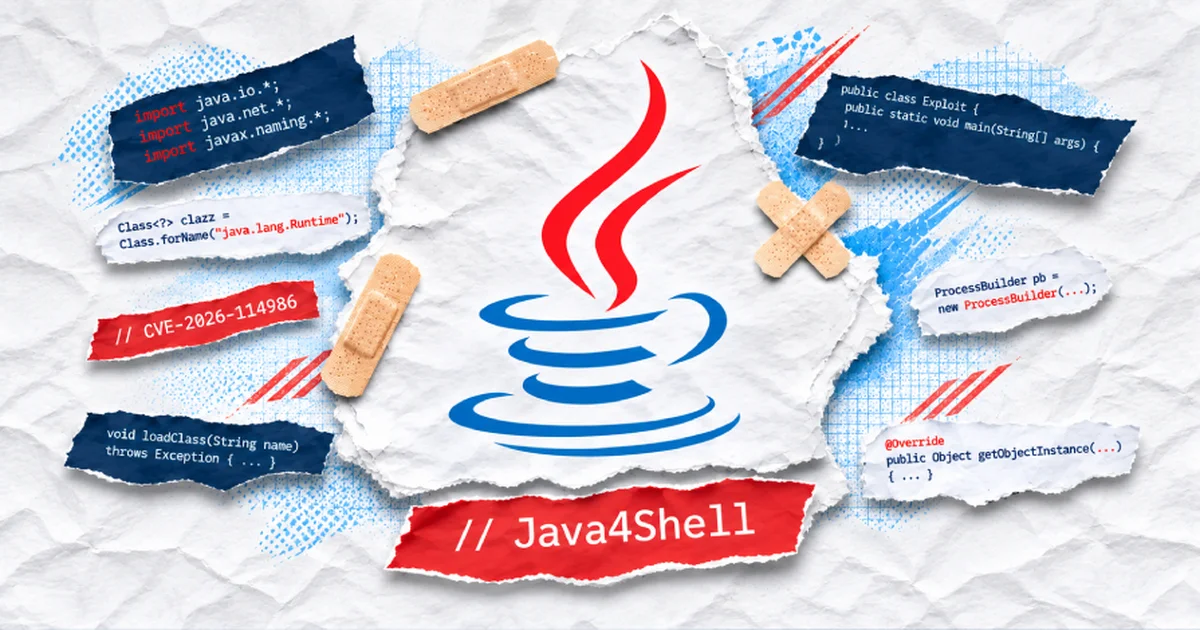
Java4Shell flaw targets major enterprise applications on AVX-512 VBMI servers
Executive Briefing
“A critical vulnerability has been uncovered in how Java handles Base64 decoding on x86-64...”
Key Takeaways
- 1.Tracked as CVE-2026-114938, the flaw resides in an optimized Base64 decoding routine running on Intel and AMD chips supporting the AVX-512 VBMI instruction set.
- 2.A malformed Base64 string ending with an extra equals sign causes the decoder to write 62 or 63 bytes past the end of the buffer before the string is rejected.
- 3.Oracle and the OpenJDK project released fixes this week, while Amazon has updated its Corretto builds and Red Hat is still preparing patches.
A critical vulnerability has been uncovered in how Java handles Base64 decoding on x86-64 processors equipped with AVX-512 VBMI. The flaw allows unauthenticated attackers to target widely deployed enterprise platforms including Jira, Jenkins, and Keycloak.
Incident Details & Technical Context
Tracked as CVE-2026-114938, the flaw resides in an optimized Base64 decoding routine running on Intel and AMD chips supporting the AVX-512 VBMI instruction set.
A malformed Base64 string ending with an extra equals sign causes the decoder to write 62 or 63 bytes past the end of the buffer before the string is rejected.
Oracle and the OpenJDK project released fixes this week, while Amazon has updated its Corretto builds and Red Hat is still preparing patches.
Risk Assessment & Security Implications
The vulnerability weaponizes how servers process unauthenticated data streams by decoding login headers and security tokens before verifying user permissions.
Relying on specific hardware features means an identical container image may remain secure on one infrastructure while exposing vulnerabilities on a server with newer instruction sets.
Mitigation & Factors to Watch
The practical feasibility of achieving full remote code execution across every target application has not yet been universally demonstrated by all security labs.
The precise scale of active exploitation attempts targeting enterprise environments remains undocumented.