Finding New Drugs Is Laborious. This AI Startup Is Skipping The Lab Work
Executive Briefing
“A new British startup believes that artificial intelligence is the key to speedrunning the slow and”
Key Takeaways
- 1.A new British startup believes that artificial intelligence is the key to speedrunning the slow and temperamental process of drug design.
- 2.Potential Sciences plans to build large-scale chemical datasets by using basic principles of physics to simulate interactions between atoms, then small molecules, then complex amino acids and proteins.
- 3.With that data, it’s betting it can train AI models and prediction systems capable of identifying highly targeted drugs for specific diseases, bypassing costly and time-consuming lab experimentation.
A new British startup believes that artificial intelligence is the key to speedrunning the slow and temperamental process of drug design.
Potential Sciences plans to build large-scale chemical datasets by using basic principles of physics to simulate interactions between atoms, then small molecules, then complex amino acids and proteins. With that data, it’s betting it can train AI models and prediction systems capable of identifying highly targeted drugs for specific diseases, bypassing costly and time-consuming lab experimentation.
“We want molecules that are never going to work in the clinic to fail fast,” Hatem Helal, Potential Science’s founder and CEO, tells WIRED. “That means having better predictors of how they will behave as they interact with human biology.”
The startup, which launched on November 5, says it has seed funding in the tens of millions of dollars from SovAI—the UK government’s AI venture capital fund—and Twin Path Ventures, among other investors. The founders declined to disclose the precise figure or valuation.
If things pan out as Potential Sciences hopes, it could pave the way for the accelerated development of new treatments for all sorts of diseases. By reducing the cost of experimentation, Helal says, the company’s approach could also make it economical for pharmaceutical companies to pursue drugs for rare conditions that have previously gone untreated.
“We want to make it possible to have more bespoke treatments for diseases—this idea that medicines can be one-off molecular combinations that are tailored to your unique human biology,” he says.
The question is whether Potential Sciences will be able to predict how well drug candidates will bind to disease-related proteins as accurately as it hopes, which would require a marked leap forward.
“I’m sure it will be an improvement,” says Peter Wolynes, a professor of chemistry at Rice University. But currently, “the engineering is at the level of the Romans, not of the Renaissance, in terms of how protein engineering is done,” he says.
Industry luminaries like Demis Hassabis, who won the Nobel Prize for Chemistry for his work at Google DeepMind, have long said that advances in AI will eventually lead to momentous scientific breakthroughs, in the same way the technology has recently carved up mathematics. The hope among startups like Potential Sciences is that drug discovery will be one of the first scientific frontiers to be transformed by the technology.
At the moment, a large proportion of AI drug discovery labs are developing models on top of a single public database of 3D atomic structures—the Protein Data Bank—which researchers have expanded over decades with the results of new experiments. The problem, according to Helal, is that the dataset remains too small to train AI models advanced enough to reliably accelerate the search for viable drug candidates.
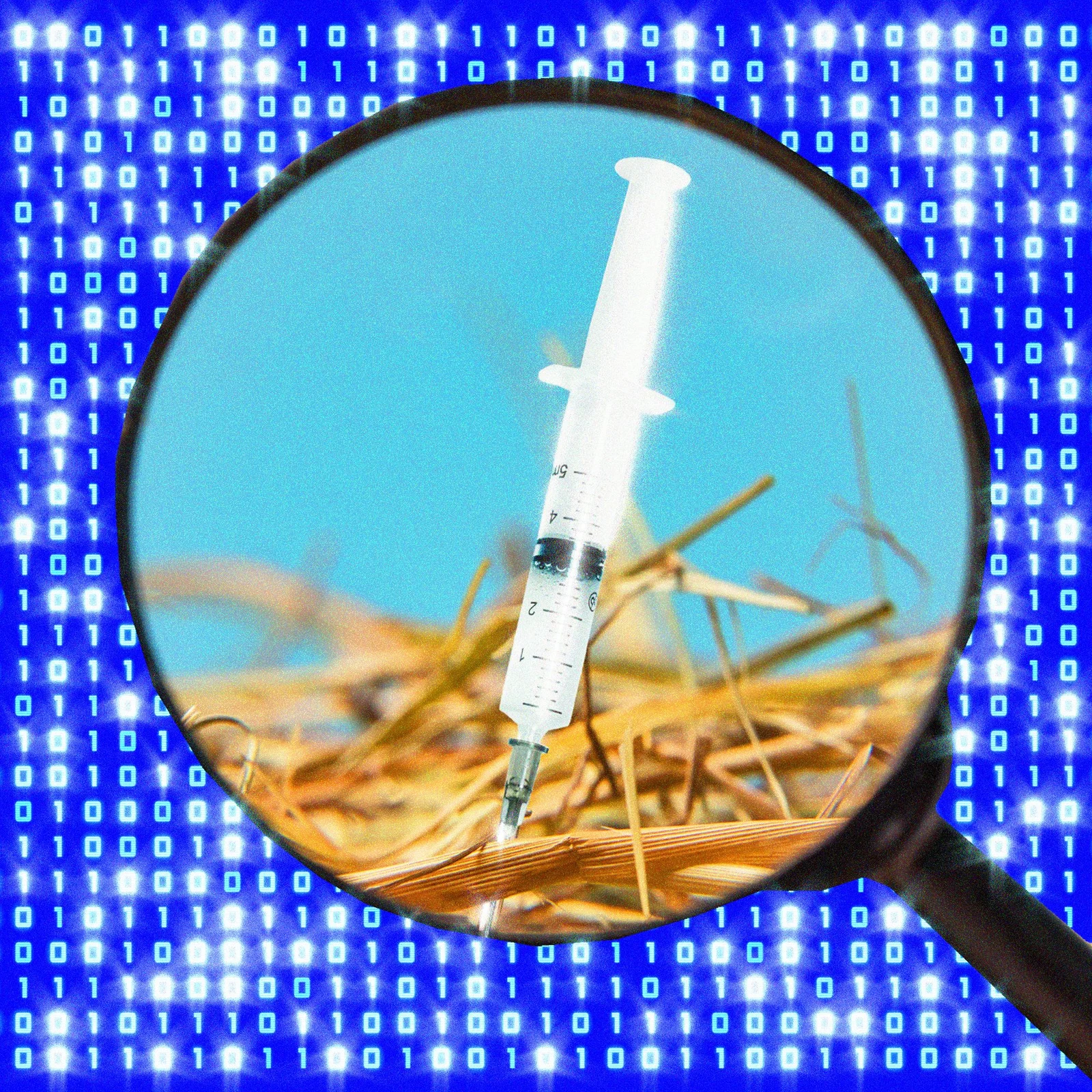
“Of all the atoms in the universe, there’s around 10 60 ways that you could assemble them into molecules that you could potentially give to a human,” says Helal. “Think of drug discovery as a search problem; it’s about how fast you can navigate and prune that space into promising molecules for a particular disease.”
To address that issue, Potential Sciences is trying to construct far larger datasets made up of synthetic data, produced by simulating interactions between different chemical compounds. From far larger pools of data, the theory goes, the startup will be able to train far more advanced AI models and prediction systems.
Academics see the potential in the simulation-based approach that Potential Sciences has adopted. “If we could calculate accurately the interactions between all molecules in the cell and the fluctuations in their structure we could predict where molecules would bind and that would indeed revolutionize drug development,” says Alan Fersht, an emeritus professor of chemistry at the University of Cambridge who specializes in protein engineering. “I am optimistic that this will eventually happen.”
In receiving investment from SovAI, Potential Sciences joins fellow AI drug discovery companies Basecamp Research and Isomorphic Labs, and materials discovery startup CuspAI.
The UK government established SovAI earlier this year with a mandate to invest in British startups capable of becoming indispensable components of the global AI supply chain, affording the country vital geopolitical leverage. The fund has at its disposal roughly $800 million and the ability to offer its portfolio companies access to the UK’s national AI supercomputer.
“Coming at drug discovery from a physics angle—the physics of chemistry—sets [Potential Sciences] apart from other companies,” says Joséphine Kant, head of ventures at SovAI, who has joined the startup’s board as part of the investment. “Giving them access to computing resources, they can do this work at a scale that would be very difficult otherwise for a small startup.”
However, AI drug discovery is a crowded market. Even with a leg up from the UK government, Potential Sciences will face steep competition from a multitude of entrepreneurs and academics racing to solve the same bottlenecks from varying angles of approach.
Nor does the ability to more quickly identify promising drug candidates eliminate the cost and time required to test their safety and efficacy, meaning new treatments will continue to take a long time to come to market, regardless of advances in AI. “The cost of designing a drug is nothing compared to figuring out what it will do to mice; to really sick patients; to normal people,” says Wolynes. “In some sense, it’s not the rate-limiting phenomenon.”
As the field progresses, startups like Potential Sciences will also have to contend with the prospect that technologies able to identify effective treatments could be abused to develop highly dangerous chemicals, too. “If we can design tools that perfectly minimize toxicity, it’s a bit flip to maximize it as well,” Helal says.
Potential Sciences doesn’t yet have all the answers. The startup hasn’t settled on a way to generate revenue from the various technologies it’s developing nor decided whether to make its models freely available, given the potential for misuse. But Helal is convinced that there are few more worthwhile problems to try to remedy with AI.
“There have been many waves of promising breakthroughs that don’t quite have an impact in drug discovery,” says Helal. “It’s a fundamental, high-impact problem for us to try and solve.”
Comments
Back to top