Apple Macintosh 128K (1984): the first computer with mouse and graphical interface to reach the masses
Executive Briefing
Synthesized and verified with gemini-2.0-flash-thinking-exp
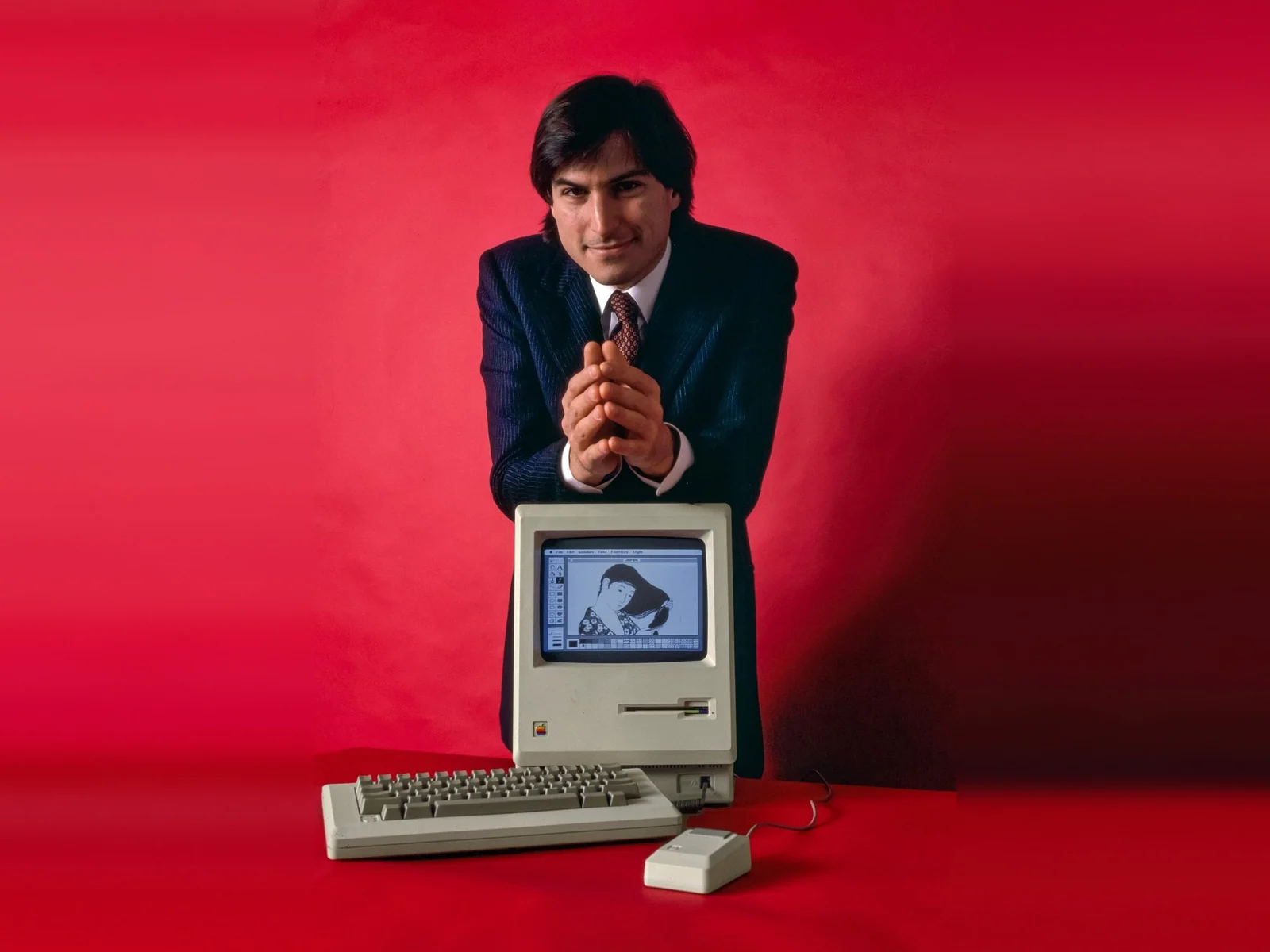
“*Steve Jobs with the Macintosh in January 1984, photo by Bernard Gotfryd kept at the US Library of C”
Key Takeaways
- 1.*Steve Jobs with the Macintosh in January 1984, photo by Bernard Gotfryd kept at the US Library of Congress.
- 2.On the screen is Hashiguchi Goyō's painting Woman Brushing Her Hair* ## **From a cheap computer project** In 1979, Jef Raskin launched the Macintosh project at Apple with the idea of a cheap, easy-to-use machine for ordinary people, initially planning to use a text interface.
- 3.That same year, Steve Jobs visited Xerox PARC, saw the graphical interface here and redirected the Lisa project to this type of interface.
Steve Jobs with the Macintosh in January 1984, photo by Bernard Gotfryd kept at the US Library of Congress. On the screen is Hashiguchi Goyō's painting Woman Brushing Her Hair
From a cheap computer project
In 1979, Jef Raskin launched the Macintosh project at Apple with the idea of a cheap, easy-to-use machine for ordinary people, initially planning to use a text interface. That same year, Steve Jobs visited Xerox PARC, saw the graphical interface here and redirected the Lisa project to this type of interface. In the Macintosh group, engineer Burrell Smith designed a board that used the same Motorola 68000 processor as the Lisa but required less RAM, so it was much cheaper. By December 1980, Smith had finished designing this circuit board. That design attracted Jobs' attention, he took over the Macintosh project, and Raskin left the team in 1981.
"1984" advertisement and release date
Macintosh was introduced through the television commercial "1984" directed by Ridley Scott, costing $1.5 million, broadcast during the third quarter of Super Bowl XVIII on January 22, 1984. The film recalls the novel
1984by George Orwell: a female athlete runs into the crowd listening to "Big Brother" speak on a giant screen and throws a sledgehammer to smash the screen. The last line promises that thanks to the Macintosh, 1984 won't be like "1984". This was the only national broadcast of the video, now considered a promotional masterpiece.
Two days later, Jobs demonstrated the machine on stage. According to Hertzfeld on Folklore.org, the software team quickly created a demo in which the Macintosh introduced itself in a synthesized voice: "Hello, I am Macintosh. It sure is great to get out of that bag." The demo was so heavy that it couldn't run on a 128 KB machine, so the team used one of the two Mac 512K prototypes available at the time. By April 1984, Apple had sold 50,000 units, and the number reached 70,000 on May 3, 1984.
Macintosh 128K with keyboard and mouse, displayed at the Neo Preistoria exhibition in Milan (Italy) in 2016
What made it different in 1984
- Motorola 68000 7.8336 MHz processor, 128 KB RAM and 64 KB ROM contained a built-in QuickDraw graphics library, while most machines at that time only had 4 to 8 KB ROM.
- 9 inch black and white CRT screen, resolution 512 x 342 pixels, 72 pixels per inch.
- 3.5 inch 400 KB floppy drive, larger capacity than the 5.25 inch 360 KB drive of the IBM PC XT at the same time.
- One-button mouse and two included software MacWrite and MacPaint.
- Keyboard without arrow keys and number keys, to encourage companies to write new software for graphical interfaces.
- No fan: Jobs wanted the machine to run quietly, because he thought the fan noise distracted users.
Macintosh one-button mouse. Instead of typing a command, the user hovers, clicks the icon, and pulls down the menu
The biggest limitation is memory: the operating system takes up about 40 KB, leaving only about 88 KB for applications and data. The machine only has one drive so users have to constantly change disks. However, Gregg Williams of BYTE magazine called the Macintosh the most important development in the computer industry in the previous five years.
The group's signature is on the case
Jobs considered the Macintosh team to be artists, and artists signed their work. According to Hertzfeld, on February 10, 1982, after a weekly meeting, the group held a signing session on a large sheet of drawing paper spread out by Jerry Manock, the leader of the industrial design team. About 35 people signed in about 40 minutes, Burrell Smith signed first, Jobs signed last near the middle. The signatures are engraved into the mold of the plastic case, so every Mac that leaves the factory has them on the inside. Most buyers never see them, because a special tool is required to open the case.
Advertisement
Steve Jobs's signature is embossed on the inside of the case of an early Macintosh. This case detail is dated February 10, 1982, the day the development team held the signing ceremony
The all-in-one design also comes with a closed view. The device does not have an expansion slot, only Apple warranty centers can open the case. However, some engineers silently added two address lines on the board without Jobs knowing, so that the machine could be upgraded to 512 KB of RAM later.
Original Macintosh motherboard, approximately 22 x 22 cm, carrying a Motorola 68000 processor and 128 KB of soldered RAM
After 128K comes 512K, Plus and an extended model
In September 1984, Apple released the Macintosh 512K with four times the RAM, nicknamed "Fat Mac", and from then on the new original machine was named Macintosh 128K. Old computer owners who want to upgrade must pay 995 USD to replace the motherboard. The 512K version could run Microsoft Excel, and the LaserWriter printer was released soon after, contributing to turning the Mac into a prepress layout tool in the office.
Advertisement
On January 16, 1986, Macintosh Plus was launched for $2,599, with 1 MB of RAM that could be upgraded to 4 MB, an 800 KB drive and a SCSI port to attach an external hard drive. The machine was manufactured until October 15, 1990. According to the Computer History Museum (USA), icons and mice had been in the laboratory for many years, but the Macintosh was the machine that brought that idea to the public, and Microsoft's Windows later followed suit.
Macintosh Plus launched in January 1986 with 1 MB of RAM, an 800 KB drive and a SCSI port, retaining the clean design of the first Mac
Source:
Wikipedia: Macintosh 128K
,
Wikipedia: 1984 (advertisement)
,
Folklore.org: Signing Party
,
Folklore.org: It Sure Is Great To Get Out Of That Bag
,
Computer History Museum
,
Wikipedia: Macintosh Plus