Fire: the first invention that changed humanity, from holding embers to making fire
Executive Briefing
Synthesized and verified with gemini-2.0-flash-thinking-exp
“Before the wheel, writing or agriculture, human ancestors mastered something that determined many la”
Key Takeaways
- 1.Before the wheel, writing or agriculture, human ancestors mastered something that determined many later developments: fire.
- 2.Fire provides warmth, light, drives away wild animals at night and helps cook food.
- 3.But when did people start using fire, and when did they know how to create their own fire, there is still debate.
Before the wheel, writing or agriculture, human ancestors mastered something that determined many later developments: fire. Fire provides warmth, light, drives away wild animals at night and helps cook food. But when did people start using fire, and when did they know how to create their own fire, there is still debate.
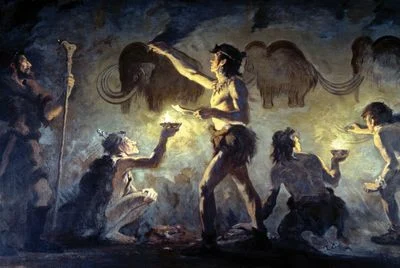
Painting by Charles R. Knight (1920) at the American Museum of Natural History: Cro-Magnon man painting in Font-de-Gaume cave under firelight
Using fire and creating fire are two different things
The first fire humans used was likely embers from forest fires caused by lightning. According to researchers, mastery of fire takes place through several stages:
- About 3 million years ago, savannas expanded in East Africa, where natural fires occurred frequently but were easier to avoid in the jungle.
- Foraging in recently burned areas, like steppe chimpanzees and vervet monkeys today.
- Take advantage of hot spots after the fire to cook food.
- Carrying a fire from one place to another and keeping it alive for an entire season can lead to long-term encampments.
- Build a fire, for example a ring of stones around it.
- Finally, create your own fire, by rubbing wood or hitting rocks to get a spark.
The oldest traces
It is difficult to distinguish human-burned ashes from naturally occurring ashes, so much of the Early Paleolithic evidence is uncertain. Some typical locations:
- Wonderwerk Cave, South Africa: burnt bones and plant ash located deep in the cave, out of reach of forest fires, dated about 1 to 1.79 million years.
- Koobi Fora, Kenya: red sediment layer may have been burned by Homo erectus about 1.5 million years ago, but has not been confirmed.
- Gesher Benot Ya'aqov, Israel: heated fish teeth, about 780,000 years ago, are considered the earliest evidence of highly likely cooking.
- Zhoukoudian, China: burnt bones, ash and charcoal with Homo erectus fossils, about 460,000 to 230,000 years ago, whether the fire was set by humans or not is still debated.
Zhoukoudian Cave near Beijing, where burned bones, ash and charcoal were found alongside Homo erectus fossils
The evidence becomes much more widespread and convincing around 400,000 to 300,000 years ago, and by about 125,000 years ago modern humans were almost as widespread as they are today.
Barnham: 400,000 year old fire-making traces
In December 2025, Nature magazine published research led by the British Museum in Barnham, Suffolk County, England. On a 400,000-year-old ancient soil surface, the team found baked soil, a flint handaxe cracked by heat, and two small pieces of pyrite about 2 cm long. Smashing pyrite into flint will create a spark. Pyrite is rare in this area, so the team believes it was brought there on purpose to start a fire. The fire is lit many times in the same place, more like a stove than a forest fire.
According to London's Natural History Museum, this pushes the earliest known date of fire creation back by about 350,000 to 360,000 years, depending on how you calculate it. Before that, the earliest solid evidence came from northern France, about 50,000 years ago. The person who set the fire at Barnham was likely an early Neanderthal, but there are no human fossils in situ to confirm. Not everyone agrees: Leiden University professor Wil Roebroeks argues that much of the evidence is circumstantial.
Making fire with friction sticks in Samburu, Kenya, an ancient technique still in use
Advertisement
Cooking food and big brains
The cooking hypothesis, developed by primatologist Richard Wrangham (Harvard University) in Catching Fire in 2009, posits that cooking helps the human brain grow. According to Smithsonian Magazine, the human brain at rest uses about one-fifth of the body's energy. Cooked food is easier to digest: with cooked oatmeal, wheat or potatoes, the body obtains about 30% more energy than when eating raw.
- Cooking turns roots and fibrous plants, which are indigestible when raw, into a food source.
- Heat eliminates toxins in some foods such as cassava and flaxseed.
- Cooking kills parasites and reduces the amount of energy spent chewing and digesting.
This hypothesis has also been criticized: cooking alone may not be enough to initiate the trend of brain enlargement. The solid evidence for fire is also much later than the mark of about 1.8 million years ago, when the brains of human ancestors began to grow rapidly.
Fire changed human life
- Expanding the area: warmth helps people live in cold areas.
- Extending the day: firelight allows activities after dark. Researchers suggest that gathering around a fire may have promoted communication, teaching and learning, and even language.
- Tool making: about 164,000 years ago, people at Pinnacle Point, South Africa heated silcrete to make it easier to carve into sharp blades.
- Pottery: about 20,000 years old pottery fragment found in Tien Nhan Dong cave, China.
Source:
Wikipedia
,
Natural History Museum
,
Nature (Davis et al., 2025)
,
Smithsonian Magazine

