Plaud Note Pro - 'AI recording card' costs 5.8 million VND
Executive Briefing
Synthesized and verified with gemini-2.0-flash-thinking-exp
“# Plaud Note Pro - 'AI recording card' costs 5.8 million VND Plaud Note Pro has a design similar to”
Key Takeaways
- 1.# Plaud Note Pro - 'AI recording card' costs 5.8 million VND Plaud Note Pro has a design similar to a bank card, supports recording and content analysis with AI, but the price is high.
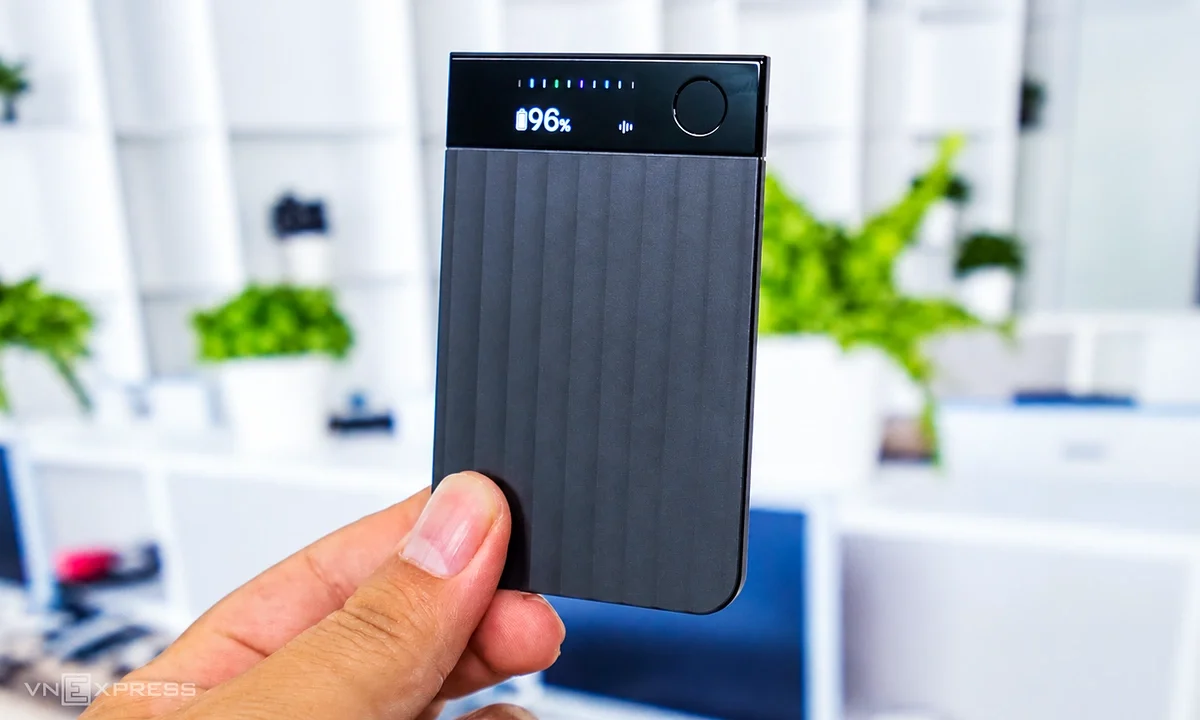
- 2.Launched in the Vietnamese market at the end of October, Note Pro, a recording device from the American brand Plaud, has a card-shaped design with dimensions of 85.6 x 54.1 mm, uses aluminum alloy and can be attached to the phone via magnetic accessories, compatible with Apple MagSafe.
- 3.With a thickness of 2.99 mm and weight of 30 grams, Note Pro does not take up much space, useful for recording calls without using a smartphone, which can be limited by security and privacy mechanisms.
Plaud Note Pro has a design similar to a bank card, supports recording and content analysis with AI, but the price is high.
Launched in the Vietnamese market at the end of October, Note Pro, a recording device from the American brand Plaud, has a card-shaped design with dimensions of 85.6 x 54.1 mm, uses aluminum alloy and can be attached to the phone via magnetic accessories, compatible with Apple MagSafe.
With a thickness of 2.99 mm and weight of 30 grams, Note Pro does not take up much space, useful for recording calls without using a smartphone, which can be limited by security and privacy mechanisms. However, users need to consider microphone placement, how to hold the device, and compatibility with wireless charging accessories.
Despite being thin and light, the Note Pro still has a 0.95-inch AMOLED screen with a maximum brightness of 600 nits that displays recording status, battery life and capacity, along with Bluetooth 5.4 connectivity, 2.4/5 GHz Wi-Fi and 64 GB internal memory. The camera body is equipped with a button to help activate quick recording by pressing and holding, or mark important points while recording.
Surrounding the card is a recording system consisting of four MEMS microphones and a vibration conduction sensor. The card uses a charging cable with a contact pin connection - reasonable with a design that is thinner than the thickness of a USB-C port, but can cause inconvenience to users if they forget the cable.
With four microphones in four corners combined with a VPU voice signal processor, the system can capture voices from many directions, reduce the influence of noise and clarify speech before moving on to AI processing. The device has a maximum sound range of 5 meters in Enhance mode with a continuous recording time of 30 hours, or 3 meters in Endurance mode but increases the usage time to 50 hours. When the battery capacity drops below 20%, Adaptive mode will activate to save power and extend usage time.
Practical experience shows that the recorded sound quality is clear in a meeting room environment, but may be worse in noisy places, making it suitable for face-to-face interviews or group meetings. Call recording is also quite good, equivalent to about 80% of the recording quality using the smartphone recording feature.
In fact, if only considering the recording ability, Plaud Note Pro is difficult to differentiate from a phone or digital device. However, the device supports AI recording processing. The Plaud ecosystem combines hardware, mobile apps, AI, and desktop software to turn conversations into transcripts, summaries, and to-do lists. Users can organize content in formats suitable for their intended use.
One advantage is the ability to organize output according to purpose. Instead of just receiving a general summary, users can exploit content in a structure suitable for the job, such as a list of decisions in a meeting, tasks to follow or main points of the recording, then synthesize it into a chart. Users can use the AI Plaud Agent to turn conversations into emails, reports, presentations, and spreadsheets.
Plaud currently supports more than 112 languages, including Vietnamese. Practical experience shows that AI recognizes and analyzes quite quickly, especially Vietnamese, then gives clear, coherent main ideas with diagrams to make it easier to visualize. However, with Vietnamese recordings in noisy environments, the accuracy clearly decreased, to about 60% of the original level.
With multilingual recordings (including English, Vietnamese, and Chinese), the ability to handle each language is relatively accurate. The content after conversion retains the flow of conversation, without having to be manually processed too much. However, the device still has errors or misidentifications if specialized terminology is used, pronunciation is unclear, or there are many people speaking at the same time.
According to Ms. Megumi Yoshinaga, Plaud's Asia-Pacific and Middle East-Africa marketing director, the company's engineering team is continuing to improve the ability to recognize Vietnamese, including Northern, Central and Southern accents, with expected updates in the near future. She also affirmed that the device ensures privacy and user data is not collected for AI training.
Another barrier is that using AI on the Note Pro is not free. Despite the selling price of nearly 6 million VND, Plaud only provides 300 minutes of transcription (recording and converting audio files into text) per month under the Starter package (equivalent to 5 hours) - a level that can meet the needs of recording moderate meetings or interviews. If there is a higher need, users need to spend from 500,000 VND/month.
With a price of 5.79 million VND, Note Pro does not have many competitors in the AI-enabled voice recorder market, besides some models such as Remin AI (4.99 million VND) or BOYA Notra (3.8 million VND) and is higher than the price of less than three million VND of most traditional digital recorders.
Bao Lam

