Stonehenge: how prehistoric people moved tens of tons of stone blocks
Executive Briefing
Synthesized and verified with gemini-2.0-flash-thinking-exp
“On Salisbury Plain in Wiltshire, southern England, there is a giant ring of stones that has stood th”
Key Takeaways
- 1.On Salisbury Plain in Wiltshire, southern England, there is a giant ring of stones that has stood there for more than 4,000 years.
- 2.The people who built Stonehenge left no writing, did not use metal and did not know the wheel.
- 3.Yet they took tens of tons of stone blocks dozens, even hundreds of kilometers, then stood them up and placed horizontal stones on top.
On Salisbury Plain in Wiltshire, southern England, there is a giant ring of stones that has stood there for more than 4,000 years. The people who built Stonehenge left no writing, did not use metal and did not know the wheel. Yet they took tens of tons of stone blocks dozens, even hundreds of kilometers, then stood them up and placed horizontal stones on top.
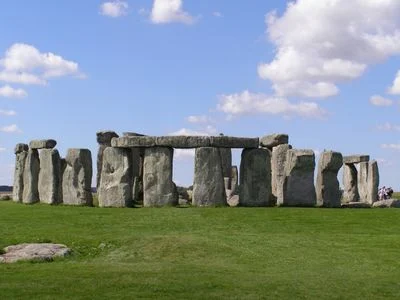
Stonehenge on Salisbury Plain, Wiltshire, England: sarsen stone circle with horizontal stones placed on vertical pillars
A structure built over many centuries
- About 3000 BC: circular trench dug with deer antlers, inside there were 56 wooden or stone pillars, used as a cremation cemetery.
- About 2600 to 2400 BC: large sarsen stone circle was erected. English Heritage records the general date as about 2500 BC.
- About 2400 to 1600 BC: smaller blue stones were rearranged several times.
- 1986: Stonehenge and the surrounding area were recognized by UNESCO as a World Heritage Site.
Animation comparing the surface of Stonehenge: in the first phase around 3000 BC, there were only moats and Aubrey pit rings, later there were sarsen rings, trilithon horseshoes and green stones still seen today
The main axis of the building faces the sunrise point on the summer solstice and the sunset point on the winter solstice.
The direction of the Sun rising and setting at Stonehenge according to each month: the main axis of the building coincides with the rising direction of the summer solstice (through the Heel Stone) and the setting direction of the winter solstice
Dawn on the 2005 summer solstice as seen from Stonehenge, the Sun rising near the Heel Stone location
Two types of rocks, two journeys
Sarsenis silcrete, a very hard form of sandstone found in southern England. Geochemical research in 2020 determined the majority of sarsen came from the West Woods area, near Marlborough, approximately 26 to 32 km from Stonehenge depending on the source. Regarding weight, sources differ: English Heritage records that each block weighs an average of 25 tons, the Heel Stone block is about 30 tons; archaeologist Mike Pitts writes on the British Museum blog that the average is about 20 tons and the largest block weighs almost twice that.
Smaller **bluestones, mainly volcanic rocks such as dolerite and rhyolite, weighing about 2 to 5 tons each, come from the Preseli Hills in southwest Wales. Wikipedia lists the distance as about 230 to 240 km, while Pitts estimates the actual journey to be about 220 miles, or more than 350 km.
Animation showing two journeys: bluestone from Preseli Hills, Wales, to Stonehenge (about 240 km as the crow flies, route drawn is hypothetical) and sarsen from West Woods near Marlborough (about 26 to 32 km)
- The quarry found at Craig Rhos-y-felin in 2011 and evidence of prehistoric quarrying published in 2019 support the hypothesis that humans, not glaciers, transported the stone.
- In Waun Mawn, Preseli, there are traces of an ancient stone circle with at least six prehistoric blue stone pillars removed, which may be part of the stone of Stonehenge.
- In 2024, the Curtin University team analyzed fragments of the Altar Stone and suggested that it came from northeastern Scotland, about 690 km away. English Heritage's site still lists the source as south-east Wales.
Advertisement
The Carn Menyn dolerite outcrop on the Preseli Hills, Wales, has long been considered a source of Stonehenge bluestone
Dragging rocks with sledges and wooden tracks
There is almost no direct evidence of transportation techniques, but Neolithic methods have been shown to be sufficient to move blocks of this size. Main hypotheses:
- Wooden roller: pulled stones on tree trunk lining, most popular theory.
- Sled on greased rails: a 1995 experiment near Stonehenge used a sled carrying a 40-ton stone slab, with more than 100 people pushing and pulling it.
- Oak sled with wooden track: according to Pitts, more than 70 sarsen blocks traveling on the same route will crush the soft ground, so it is necessary to pave the road with wood.
- Carrying green stone: a block of about 2 tons can be placed on a wooden frame for many people to carry, similar to the method recorded in the border areas of Myanmar and India last century.
Regarding manpower, English Heritage writes that it needs hundreds of well-organized people, while the British Museum's timeline page says that each sarsen block needs at least 1,000 people.
Cutting and erecting stones
In the fields north of Stonehenge there are many stone and hammer fragments made of sarsen and flint: large pieces for roughing, small pieces for smoothing. Horizontal stones are connected to vertical columns with mortise holes and mortise dowels, horizontal stone slabs are connected by yin and yang joints, traditional types of joints in carpentry.
Advertisement
Two types of carpentry joints on Stonehenge: horizontal stone slabs connected by yin and yang joints (above), the underside has a mortise hole facing the mortise peg protruding from the top of the vertical column (below)
Close-up of sarsen stone columns supporting horizontal stone slabs, connected by tenon joints like wooden furniture
According to English Heritage, the way to erect a stone pillar can be as follows:
- Dig a large hole with a sloping wall and a row of wooden stakes on the back.
- Pull the rock up using a vegetable fiber rope, most likely with an A-shaped wooden frame and heavy objects as counterweights.
- Fill the hole tightly with crushed stone.
- Use a wooden truss to lift the horizontal stone slabs to the top, then cut the dowel to fit the mortise hole.
The mortise pin is still clearly visible on the top of stone pillar number 56, the tallest remaining vertical pillar at Stonehenge, where the horizontal stone was once placed
Pitts disagreed with the image of the crowd pulling long ropes. According to him, the trilithons in the middle must be built before the outer ring, so when the outer ring is built there is no room to spread the wires and frames. He proposed a method similar to a show on Easter Island in the 1950s: use a lever to swing the stone back and forth, each time inserting more wood underneath, so that the block of stone slowly inched up to a standing position.
Who built it and for what purpose
Animal teeth at Durrington Walls, about 3km away, which archaeologist Mike Parker Pearson believes was a builder's camp, suggest up to 4,000 people could have gathered for the midwinter and midsummer festivals. The purpose of Stonehenge still has many theories: astronomical observatory, place of healing, place for the dead, or symbol of solidarity.
Source:
Wikipedia
,
English Heritage
,
British Museum (Mike Pitts)
,
British Museum (Stonehenge timeline)
,
Wikimedia Commons (phase 1 floor plan)
,
Wikimedia Commons (current site)
,
Wikimedia Commons (CMG Lee, Sun direction)
,
Wikimedia Commons (summer solstice dawn 2005)
,
Wikimedia Commons (NordNordWest, map background)
,
Wikimedia Commons (articulation diagram)
,
Wikimedia Commons (stone pillars 56)