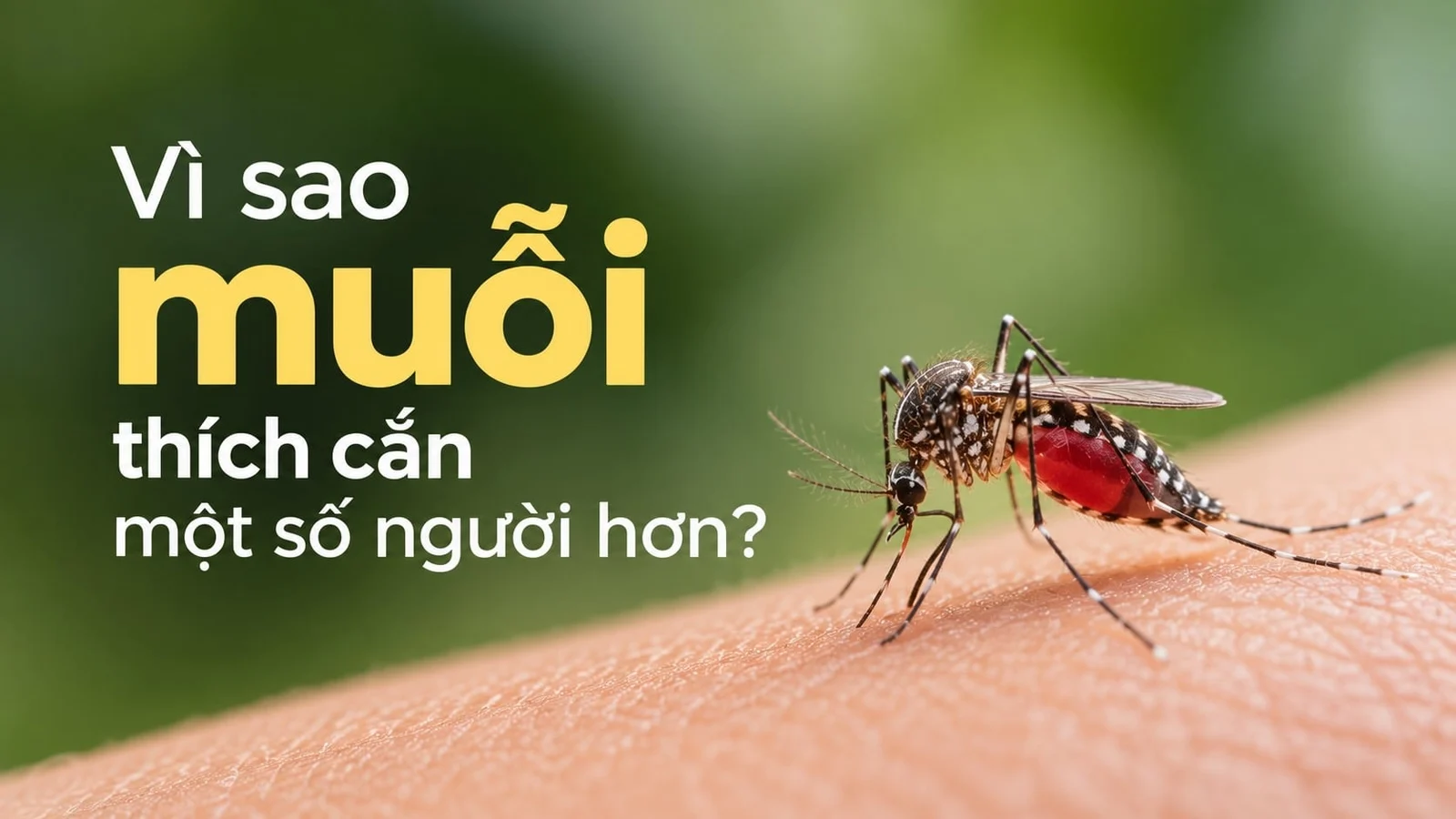
Why do mosquitoes like to bite some people more than others?
Executive Briefing
Synthesized and verified with gemini-2.0-flash-thinking-exp
“This is not necessarily a coincidence.”
Key Takeaways
- 1.This is not necessarily a coincidence.
- 2.Mosquitoes actually have the ability to choose hosts based on many different biological signals.
- 3.They can detect carbon dioxide in the breath, recognize chemical odors on the skin, sense body temperature and are even attracted to compounds that bacteria on the skin produce.
This is not necessarily a coincidence. Mosquitoes actually have the ability to choose hosts based on many different biological signals. They can detect carbon dioxide in the breath, recognize chemical odors on the skin, sense body temperature and are even attracted to compounds that bacteria on the skin produce.
Interestingly, not everyone is equally attracted to mosquitoes. Some people can be much more attractive targets than others, even when they are standing next to each other in the same environment.
So what do mosquitoes rely on to choose their prey? Does blood type, sweat or body temperature really determine who gets bitten by mosquitoes more?
1. Mosquitoes do not choose their prey at random
Many people think that mosquitoes just fly around until they accidentally land on human skin. But in reality, the process of finding their host is much more complicated.
Female mosquitoes are blood suckers, because they need nutrients in the blood, especially proteins and related components, to develop eggs. Male mosquitoes do not suck blood but mainly use nectar and plant sugar sources.
When searching for a host, female mosquitoes use a system of biosensors to detect a variety of signals from the environment. This process can be visualized in three stages:
- Remote detection: Mosquitoes recognize carbon dioxide (CO₂) exhaled by humans, thereby determining whether a potential host is nearby.
- Target access: They combine CO₂ signals with body odor and chemical compounds emitted from the skin.
- Determine the bite location: When approaching, mosquitoes use additional signals about temperature, humidity and chemical factors to find a suitable location.
This is a very sensitive biological positioning system. Mosquitoes not only recognize human presence but can also distinguish between hosts with different levels of attractiveness.
2. Body odor is one of the most important factors
If you had to find one of the most important reasons why one person is more attractive to mosquitoes than another, body odor is a top candidate. It is worth noting that body odor is not simply the smell of sweat.
Millions of microorganisms exist on human skin, including many types of naturally living bacteria. They participate in decomposing substances in sweat and sebum, creating volatile chemical compounds.
Some of these compounds can become signals that attract mosquitoes.
Advertisement
Research published in the journal Cell in 2022 by scientists at Rockefeller University (USA) found that people who are especially attracted to Aedes aegypti mosquitoes tend to produce higher amounts of carboxylic acid on their skin. This is a group of compounds related to body odor. In particular, some study participants' attraction to mosquitoes remained relatively stable during the follow-up period.
This suggests that differences in skin chemistry may play an important role in determining who is more susceptible to mosquito bites. In other words, two people can use the same soap, wear the same clothes and sit next to each other, but the microbiome and natural chemistry of their skin can still be very different.
PMC+1
3. Is blood type O really more attractive to mosquitoes?
This is probably one of the most popular theories when it comes to mosquitoes liking to bite certain people.
Many people believe that blood type O makes them a favorite target for mosquitoes, while people with blood type A or B are less likely to be bitten. This hypothesis is not completely unfounded.
A study published in 2004 in the Journal of Medical Entomology examined the response of Aedes albopictus mosquitoes to people of different blood types. The results showed that mosquitoes tend to land on people with blood type O more than on some other blood types. However, this study does not prove that all mosquitoes have a preference for blood type O, nor can it be concluded that blood type is the determining factor in the severity of mosquito bites.
Advertisement
A noteworthy point is that about 80% of the population can secrete signs related to blood type in body fluids such as saliva and some other secretions. These people are called secretors. These signals may contribute to how mosquitoes recognize hosts. So blood type may be a relevant factor, but not a complete explanation for how often a person gets bitten by mosquitoes. If you are blood type O but rarely get bitten by mosquitoes, while the person with blood type A next to you is constantly attacked, it is entirely possible.
4. People exhaling more CO₂ may attract more mosquitoes
Mosquitoes have the ability to detect carbon dioxide (CO₂) that humans emit when breathing. This is one of the important signals that helps them determine the host's location from a relatively long distance.
That also explains why people with high metabolisms or who emit a lot of CO₂ sometimes become more attractive to mosquitoes.
Some notable cases include:
- People who have just exercised: When exercising or doing vigorous physical activity, the body increases respiration and releases more CO₂.
- People with large body sizes: Typically, they can produce more CO₂ due to higher overall metabolic demands.
- Pregnant women: Physiological changes during pregnancy can increase CO₂ output and body temperature, making them more attractive to mosquitoes.
- A study published in 2000 in The Lancet documented that pregnant women were more attracted to Anopheles gambiae mosquitoes than non-pregnant women under experimental conditions.
- Researchers found that pregnant women excreted higher amounts of CO₂ and had higher abdominal temperatures. These two factors may contribute to explaining the difference.
However, CO₂ is not the only factor. It's like a signal that a host is nearby. When approaching, mosquitoes need to combine many other signals to accurately determine the target.
5. Body temperature and sweat also make you attractive
After detecting CO₂, mosquitoes continue to use other signals to reach the host. In particular, temperature and chemical compounds on the skin play an important role. Mosquitoes can sense heat from human bodies when at close range. This helps them determine where they can land and suck blood.
People who have recently exercised, been outdoors, or are sweating a lot may emit more signals that attract mosquitoes. In particular, sweat contains many compounds such as lactic acid, ammonia and other metabolites. When combined with compounds produced by bacteria on the skin, they form a chemical mixture of odors unique to each person.
That explains why after a session of outdoor exercise, some people may become more attractive targets for mosquitoes. However, it should be noted that mosquitoes do not simply like people who sweat a lot. The chemical composition of sweat and skin odor are important factors to consider.
PMC+2
6. Dark clothes can make it easier for mosquitoes to find you
Not only using their sense of smell, mosquitoes also have the ability to navigate by sight.
A 2022 study published in Nature Communications from the University of Washington found that Aedes aegypti mosquitoes use certain colors to search for hosts after detecting CO₂.
In the experiment, mosquitoes tended to fly toward red, orange, black, and cyan objects, while being less interested in green, blue, and white objects.
Notably, when the researchers removed the CO₂ signal, the response to these colors also changed significantly.
This shows that mosquito vision does not function independently but can be activated or regulated by chemical signals from the host. So wearing dark clothes can make you more visible to mosquitoes in some conditions. However, that doesn't mean wearing black clothes means you'll definitely get more mosquito bites.
This study also shows that mosquitoes can respond to certain wavelengths of light, not simply distinguish between light and dark.
7. Are people with blood type O, people with sweet blood or who eat a lot of sweets susceptible to mosquito bites?
This is one of the most common notions, but also one that is easily misunderstood.
There are three commonly mentioned hypotheses:
- Blood type O: Some experimental studies have recorded that mosquitoes are more likely to land on people with blood type O. However, other studies have shown inconsistent results. There is currently no strong enough evidence to confirm that blood type O is the cause of a person being bitten more by mosquitoes.
- Sweet blood: This is a folk saying, not an accurate biological concept to explain the attraction of mosquitoes. Mosquitoes don't need to taste blood from afar to decide who to bite. They rely mainly on CO₂, body odor and physical signals.
- Eat a lot of sweets: There is currently no reliable evidence that eating candy or foods high in sugar directly makes people more attractive to mosquitoes.
One notable piece of information from a 2022 Rockefeller University study is that scientists found that differences in skin odor are clearly linked to mosquito attractiveness, while many other popular hypotheses still lack convincing evidence.
Therefore, if you are often bitten by mosquitoes, do not rush to conclude that the cause is due to your blood type or diet.
8. What can be done to limit mosquito bites?
While some people may be more attracted to mosquitoes due to their natural biology, that doesn't mean they have to accept being bitten regularly.
There are some simple measures to help reduce the risk:
- Use mosquito repellent: Prioritize products with proven effective ingredients such as DEET, Picaridin or IR3535. Use according to label instructions.
- Wear appropriate clothes: Prioritize clothes with long sleeves, long legs and good coverage. Brightly colored clothing can also help limit some of the visual cues that attract mosquitoes.
- Limit standing water: Mosquitoes breed in water containers, so regularly check pots, buckets, containers and other areas where water can accumulate.
- Use mosquito nets: Especially useful when sleeping or resting in areas with many mosquitoes.
- Use anti-insect nets: Install nets on windows and doors to limit mosquitoes from entering the house.
For areas at risk of dengue fever like Vietnam, preventing mosquito bites is especially important. The Aedes aegypti mosquito is one of the hosts that transmits the Dengue virus, the agent that causes dengue fever. Mosquito prevention not only helps reduce itching and discomfort but also helps limit the risk of infectious diseases.
Conclusion: Mosquitoes don't like your blood, they like the signals your body gives off
The fact that some people are bitten by mosquitoes more often than others is not a coincidence. It's the result of a combination of chemical odors on the skin, CO₂ emissions, body temperature and the visual cues mosquitoes use to find hosts.
Among the factors that have been studied, differences in body odor, especially carboxylic acids in the skin, are a very notable finding. It shows that each person has a unique chemical characteristic that mosquitoes can recognize.
So if you're someone who's always bitten by mosquitoes while your friends around you are barely bothered, you may have a combination of biological signals that is especially attractive to them.
And perhaps the most interesting thing is: you don't necessarily have to have type O blood, sweet blood, or a sweaty body to be a favorite target of mosquitoes. Sometimes, just the natural chemical smell on the skin is enough to make a difference.
Reference sources of scientific documents:

