Writing arose from books: from clay tablets counting barley to Mesopotamian cuneiform
Executive Briefing
Synthesized and verified with gemini-2.0-flash-thinking-exp
“An ancient Sumerian poem says that writing was invented because a messenger could not repeat a long”
Key Takeaways
- 1.An ancient Sumerian poem says that writing was invented because a messenger could not repeat a long message, so the king of Kulaba patted a handful of clay and put words on it.
- 2.Archeology reveals a more mundane beginning.
- 3.The first lines of human writing were not poems or laws, but books: how much barley had been distributed, how many jars of oil were owed, who received the goods.
An ancient Sumerian poem says that writing was invented because a messenger could not repeat a long message, so the king of Kulaba patted a handful of clay and put words on it. Archeology reveals a more mundane beginning. The first lines of human writing were not poems or laws, but books: how much barley had been distributed, how many jars of oil were owed, who received the goods.
Counting clay tablets
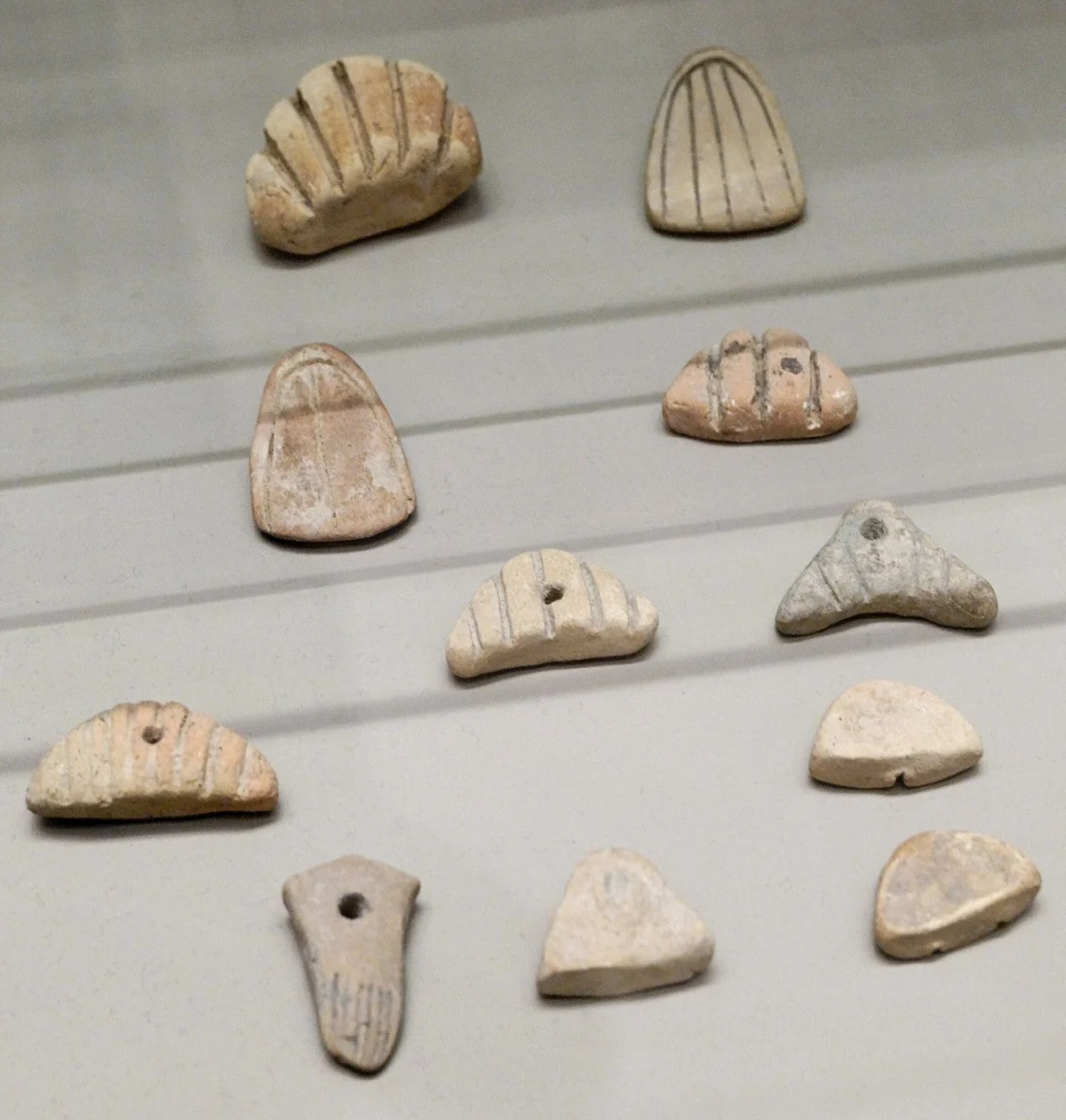
Since about 8000 BC, in many parts of the Near East, people used small clay balls shaped into cones, spheres, discs, cylinders or eggs to count rows. According to archaeologist Denise Schmandt-Besserat (University of Texas at Austin), each shape corresponds to a unit of goods: the cone-shaped pellet is a small measure of rice, the spherical pellet is a large measure of rice, and the egg-shaped pellet is a jar of oil. There are about 300 types of tablets to count. This system counts one-for-one: three jars of oil yield three egg-shaped tablets.
Schmandt-Besserat published the theory that counting tablets were the precursors to writing in the late 1970s. The interpretation of some complex counting tablets is still debated, but the idea that writing originated from counting and recording agricultural products is now accepted by most researchers.
Counting clay tablets found in Susa (present-day Iran), 4th millennium BC, displayed at the Louvre Museum. Each shape represents a unit of goods
Clay envelopes and first impressions
Around 3500 BC, in Sumer (modern-day southern Iraq) and Elam (western Iran), tablets recording a debt were placed in a hollow clay ball and sealed, like an envelope. The problem is that if you want to know what's inside, you have to break it. So the bookkeeper pressed each counting tablet onto the outside of the sphere before sealing it. Those indentations are the first written symbols, carrying the true meaning of the tablet inside.
Then people realized that just the imprints were enough. Around 3200 BC, flat clay tablets bearing seals replaced envelopes containing counting tablets, transforming information from three-dimensional objects into two-dimensional symbols.
Clay envelope (bulla) from Susa with counting tablets once inside, Louvre Museum. Markings on the shell show what's inside without having to break them
Uruk and the first signs
The first clearly written documents appeared in Uruk, often called the first city, in the Uruk IV period around 3300 BC. About 5,000 proto-cuneiform tablets were found here, mostly administrative documents recording imports, exports and the person responsible.
The big step forward is separating the number from the item. Instead of drawing 33 oil jar symbols, the writer drew one oil jar symbol with a sharp stick and pressed it with three round marks (each mark is 10) and three wedge marks (each mark is 1). Only 7 marks are needed instead of 33. These number marks were originally the impressions of conical and spherical counters, and now have an abstract number meaning.
Original cuneiform tablet circa 3100-2900 BC recording the distribution of barley, with a cylindrical seal in the shape of a man walking a hunting dog, Metropolitan Museum (New York). The board measures only 5.4 x 6 cm
Advertisement
From drawing to sound
When the state is formed, the books must record both the name of the sender and the recipient, but the names of the people cannot be drawn. Around 2800 BC, the Sumerians began to borrow pictures to indicate reading sounds, using homophone wordplay. For example, in Sumerian, "arrow" (ti) and "life" (til) sound similar so they share the same symbol. Thanks to phonographic notation, the number of characters was reduced from about 1,500 to about 600, and writing began to record speech.
In the middle of the 3rd millennium BC, writers switched to using a reed pen with a beveled tip to press into wet clay, creating wedge-shaped strokes. The name cuneiform comes from the Latin word cuneus, meaning wedge. Cuneiform was used by many peoples in many different languages for more than 3,000 years, recording everything from land sales contracts to the Code of Hammurabi around 1750 BC. The latest dated cuneiform tablet is an astronomical text from Uruk in 79/80. In the 19th century, scholars were able to decipher this type of writing.
Not just a one-time invention
Before the 20th century, many scholars thought writing was invented only once in Sumer and then spread. Today, researchers believe that writing was born independently at least in Mesopotamia, China (Shang Dynasty script, earliest around 1250 BC) and Central America (Mayan script). Egyptian hieroglyphs appeared at about the same time as Mesopotamia, and whether it was influenced by Sumer or not is debated. The first alphabet was born in the Near East in the 2nd millennium BC, and today's Latin, Greek, Arabic, Hebrew and Cyrillic alphabets all originate from there, including the Latin script used by the National Language.
Source:
Wikipedia: History of writing
,
Wikipedia: Cuneiform
,
Wikipedia: Proto-cuneiform
,
Denise Schmandt-Besserat (UT Austin)
,
The Metropolitan Museum of Art