DXC Technology builds multi-model AI substrate on Amazon Bedrock
Executive Briefing
“DXC Technology developed an automated IT operations assistant named DXC OASIS using Amazon...”
Key Takeaways
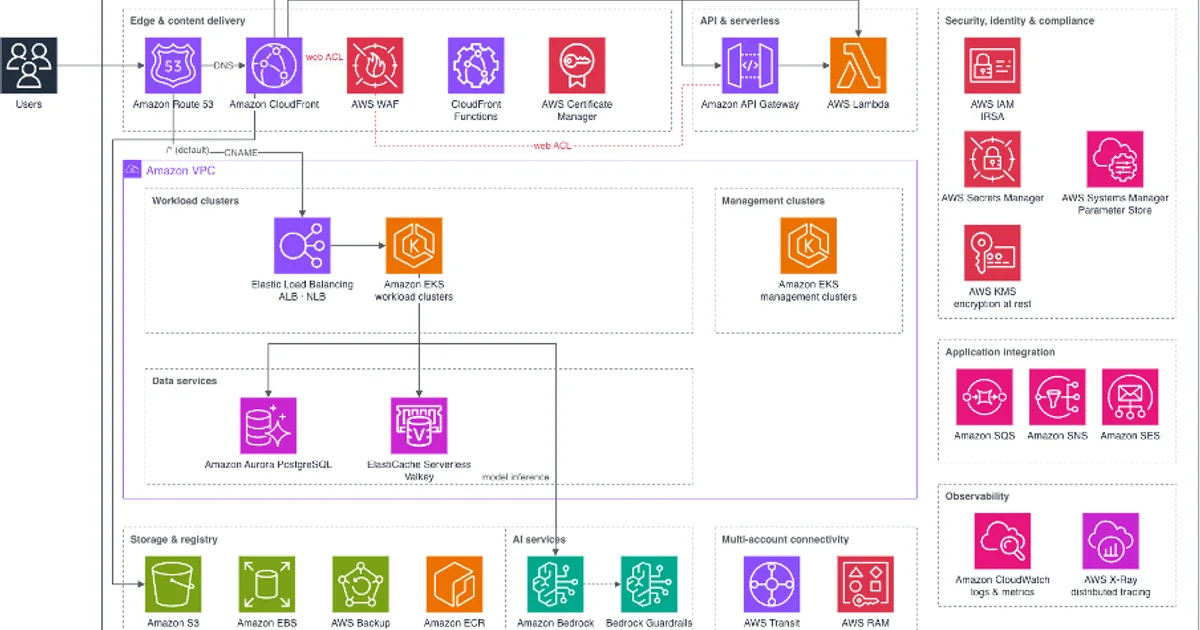
- 1.DXC Technology utilized Amazon Bedrock to access multiple foundation models including Anthropic Claude, Amazon Nova, and Meta Llama through a single managed interface.
- 2.Amazon Bedrock Guardrails enforce content filtering, personally identifiable information redaction, and denied-topic policies uniformly across every model.
- 3.Since reaching general availability in March 2026, the deployed agents have reduced resolution time by 95 percent on average across 56 measured use cases.
DXC Technology developed an automated IT operations assistant named DXC OASIS using Amazon Bedrock as its underlying substrate. This architecture reduced average resolution time by 95 percent across dozens of measured use cases.
Key Developments and Technical Context
DXC Technology utilized Amazon Bedrock to access multiple foundation models including Anthropic Claude, Amazon Nova, and Meta Llama through a single managed interface.
Amazon Bedrock Guardrails enforce content filtering, personally identifiable information redaction, and denied-topic policies uniformly across every model.
Since reaching general availability in March 2026, the deployed agents have reduced resolution time by 95 percent on average across 56 measured use cases.
Strategic Analysis and Industry Implications
Separating the foundational model substrate from the operational orchestration harness allows enterprises to swap or upgrade models without rebuilding the entire architecture.
Enforcing strict authorization tiers that require human approval for production changes mitigates the operational risks associated with autonomous agent actions.
Outlook and Key Factors to Watch
The exact operational costs and long-term economic efficiency of running this multi-model architecture across all planned enterprise tenants remain undisclosed.