Meta deploys AI test generation system to catch risky code changes before merge
Executive Briefing
“Meta has transitioned its LLM-based testing system into production infrastructure to detect...”
Key Takeaways
- 1.Meta has moved Catching Just-in-Time Tests from research prototype into its production infrastructure.
- 2.The system is an LLM-based mechanism that writes executable tests designed to fail on a risky code change.
- 3.The Meta team reports that the system caught 74 privacy SEVs at the diff stage in the first half of 2026.
- 4.The pipeline utilizes rule-based checks and an LLM judge ensemble to reduce human review load.
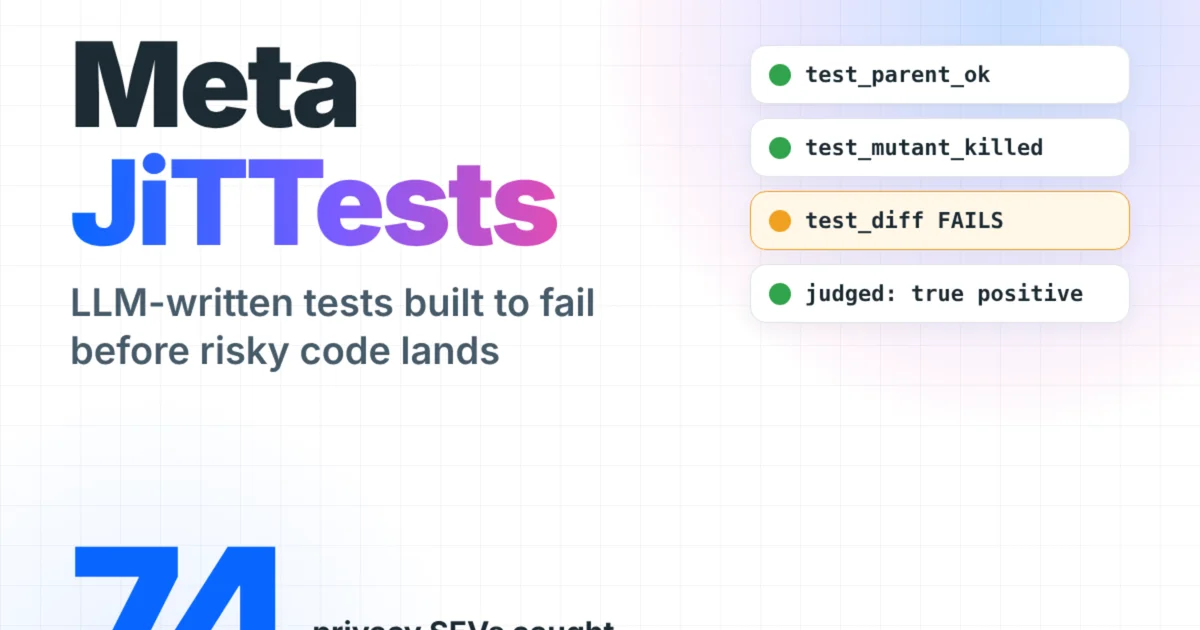
Meta has transitioned its LLM-based testing system into production infrastructure to detect bugs before code merges. The technology generates executable tests designed to fail when encountering risky code changes.
Key Developments and Technical Context
Meta has moved Catching Just-in-Time Tests from research prototype into its production infrastructure.
The system is an LLM-based mechanism that writes executable tests designed to fail on a risky code change.
The Meta team reports that the system caught 74 privacy SEVs at the diff stage in the first half of 2026.
The pipeline utilizes rule-based checks and an LLM judge ensemble to reduce human review load.
Strategic Analysis and Industry Implications
Flipping traditional hardening tests into tests designed to fail provides concrete behavioral evidence rather than relying solely on static code review comments.
Combining automated judging rules with aggregate human-on-the-loop oversight helps scale bug detection across massive enterprise codebases.
Outlook and Key Factors to Watch
Meta has not released the underlying code, models, or an API for public developer use outside its internal infrastructure.
The true-positive performance metrics remain self-reported within Meta and lack independent verification in external environments.