Google launches Gemini Decisions API with specialized low cost model
Executive Briefing
“Google has launched the Gemini Decisions API artificial intelligence service to answer...”
Key Takeaways
- 1.Google LLC launched the Gemini Decisions API designed to answer user questions in a cost-efficient manner.
- 2.Gemini Decision 1 has a narrower focus, processing just three types of questions including yes-no, multiple choice, and items rated on a user-specified scale.
- 3.According to Google, the model is nearly five times cheaper than its entry-level Gemini 3.5 Flash-Lite LLM.
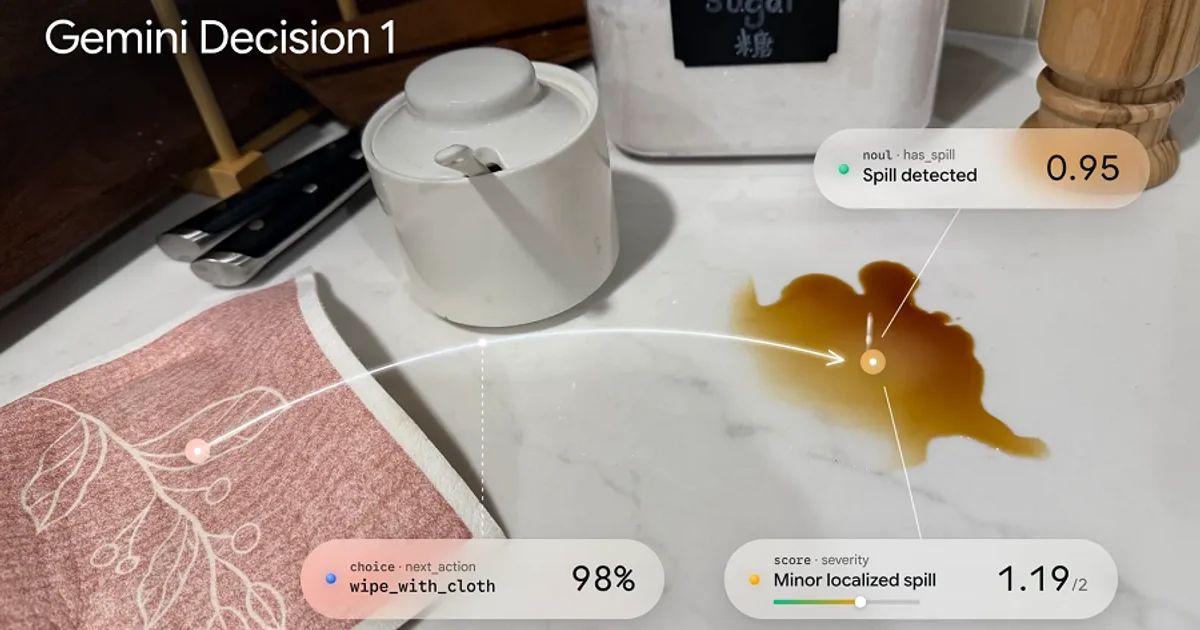
- 4.Gemini Decision 1 outputs terse answers such as yes or no alongside a score indicating its confidence in the accuracy of the response.
Google has launched the Gemini Decisions API artificial intelligence service to answer structured questions at a significantly lower cost. The service is powered by a new Gemini Decision 1 model.
Key Developments and Technical Context
Google LLC launched the Gemini Decisions API designed to answer user questions in a cost-efficient manner.
Gemini Decision 1 has a narrower focus, processing just three types of questions including yes-no, multiple choice, and items rated on a user-specified scale.
According to Google, the model is nearly five times cheaper than its entry-level Gemini 3.5 Flash-Lite LLM.
Gemini Decision 1 outputs terse answers such as yes or no alongside a score indicating its confidence in the accuracy of the response.
Strategic Analysis and Industry Implications
Focusing on structured answers rather than free-flowing text generation helps significantly reduce processing costs and latency in practical applications.
Providing a confidence score alongside the response allows automated systems to easily filter data and decide when to utilize the model output.
Outlook and Key Factors to Watch
The real-world performance and stability of Gemini Decision 1 under large-scale enterprise deployments remain independently unverified.
Long-term market reception for the decision model segment amid competition with rivals such as Jev and OpenAI remains an open question.