I like the MacBook Pro OLED very much, but the touch screen is not
Executive Briefing
Synthesized and verified with gemini-2.0-flash-thinking-exp
“## **What does this MacBook Pro have** At first glance, it's still the familiar MacBook Pro, still”
Key Takeaways
- 1.## **What does this MacBook Pro have** At first glance, it's still the familiar MacBook Pro, still 14 and 16 inch versions.
- 2.The big difference lies in the screen: OLED is brighter, deeper black, wider color.
- 3.The rabbit ear is also replaced by Dynamic Island, a place for Spotlight, Live Activities and Siri.
What does this MacBook Pro have
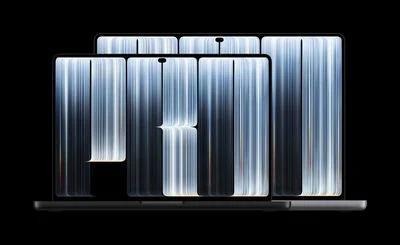
At first glance, it's still the familiar MacBook Pro, still 14 and 16 inch versions. The big difference lies in the screen: OLED is brighter, deeper black, wider color. The rabbit ear is also replaced by Dynamic Island, a place for Spotlight, Live Activities and Siri. The glowing Apple logo on the back is also back. Anyone who has used an old MacBook will surely be happy.
The device is also thinner and lighter than before thanks to a more compact OLED panel. The price is not cheap at all, the 14-inch version starts at 2,899 USD, the 16-inch version from 3,399 USD, and the more powerful chip version starts from about 4,500 to 4,800 USD.
Why do I love this OLED screen
I make photos and videos, so the screen is what I look at all day. The MacBook Pro screen has been beautiful for several years now, but sometimes I still see halos around bright objects on a dark background, which makes it uncomfortable to look closely. With OLED, each pixel lights up and turns off automatically, black is true black, watching HDR content is much more enjoyable. Apple also added the color range that printers and photographers have been asking for for a long time, and the screen is color-calibrated from the factory. To me, that is the most valuable thing about this machine.
The second thing I like is that the machine is lighter. It sounds small, but for someone like me who often carries the phone on business trips, it's a little lighter and can be felt on the shoulder. The screen also has a new anti-glare layer, which is a plus for people like me who often work in many places.
In general, the OLED part is what MacBook Pro users have been waiting for for a long time: standard colors, deep black, light machine. At this point, I don't see anything to criticize.
But why don't I need a sensor
Advertisement
Apple does the touch part quite carefully: swipe to scroll, pinch to zoom in on the photo, double tap to enlarge the window. The company also remade the hinge to prevent the screen from shaking when touched, and added anti-shake to the camera when you accidentally touch the screen while making a video call.
Personally, I think it's the last two details that tell the problem. The laptop screen stood straight, an arm's length away from my hand. Every time I touch it, I have to raise my hand, and the screen vibrates so much that Apple had to repair both the hinge and the camera. Standing up to touch the screen for a while is tiring, the interface designers even named it gorilla arm. In 2010, Steve Jobs also explained why Apple does not make touch-sensitive Macs, basically saying that the vertical screen is not suitable for touching, the demo is beautiful but using it for a long time is tiring. Ten years later, Apple changed its mind, but our arms remained the same.
Then there are fingerprints. What I love most about OLED is the deep blacks and accurate colors, and a glossy screen full of finger marks destroys those things. Anyone who colors or edits photos surely understands the feeling of having to constantly take out a towel to wipe the screen.
In addition, macOS was created for the mouse pointer, not the finger. The menu is small, the button to close the window is small, and the toolbar in the professional app is dense. Apple says that many apps can be touched immediately because the device automatically understands the touch as a click, but then the finger is just a larger and less accurate pointer. Honestly, the MacBook trackpad is still the best trackpad on a laptop, I don't see any reason to take my hand off it.
Advertisement
Lessons from Windows touch laptops
Touch laptops are not new. The Windows side has been doing it for a long time, there are also 2-in-1 machines, machines that fold the screen upside down. I couldn't find any reliable surveys about how often users touch their laptop screens, so I didn't make up the numbers. But reviewing the device for many years, I found that the touch screen is only really useful when the device folds into a tablet or uses a pen. As for normal laptops, most of them are just for scrolling pages or quickly pressing a button when your hand is nearby.
The new MacBook Pro is still a clamshell-style laptop that cannot be folded upside down, and Apple also did not mention a pen. That is, it falls into the position where touch is least useful.
Then there's the iPad, guys. Apple already has an iPad Pro with an OLED screen, pen, and keyboard. Anyone who needs to draw, needs to touch, needs a device that is both a tablet and can work, already has that choice. Adding touch to the MacBook Pro blurs the line between the two lines, but also doesn't provide a true tablet experience.
So who really needs induction
It's fair to say that some groups will find it useful. Graphics people can use the whole screen as a canvas, while 3D people can rotate the model by hand. Musicians can play keyboards and drum pads right on the screen. Video editors can pinch to zoom in on the timeline and drag clips to the right place. People who make apps should try iPhone and iPad apps using real touch right on the Mac.
But I noticed that these cases are only used occasionally. No one sits and plays piano on an upright laptop screen all day, and professional artists will still hold a pen and drawing board or iPad. As for normal users like me, I probably mainly touch to scroll the page, view photos or click on Dynamic Island. Convenience is there, but it's hard to call it a reason to spend money.
The price for something you don't need
This is what worries me the most. Just a day before, Apple released a regular 14-inch MacBook Pro priced from 1,999 USD, still with the old screen, still with rabbit ears, no touch. If you want OLED, Dynamic Island and a lighter device, you have to upgrade to the OLED version from 2,899 USD, and the touch screen comes with it, no option to pay.
The two devices are different in many ways, so I'm not saying the $900 difference is for the touch sensor alone, nor is Apple saying how much this part costs. But looking at purchasing behavior, this is a familiar bundling style: what users want is OLED bundled with what Apple wants to push, which is touch. Anyone who wants the most beautiful screen is forced to buy a touch screen, and so everyone thinks that this feature is chosen by many people, when in fact people only choose the screen.
This has happened before with the Touch Bar. In 2016, the Touch Bar was only available on genuine MacBook Pro versions, anyone who wanted a powerful machine had to get the Touch Bar. A few years later Apple dropped it. I'm not saying touch will have the same fate, because this time Apple is much more methodical, but the lesson is that being packaged in a high-end device doesn't mean users really need it.
Should Apple sell a non-touch OLED version
In my opinion, it should be at least allowed to choose when ordering the device, just like Apple is offering anti-glare glass options. A non-touch OLED version could be lighter, a little cheaper, or simply give users the option. If removing the touch screen doesn't save anything, then at least macOS should have a switch to turn it off completely, to avoid accidentally touching it when showing the screen to colleagues.
As for those of you who are thinking about buying, I think just ask yourself one question: do I buy this device because of the screen or because of the touch? If it's because of the OLED screen, light device, Dynamic Island, and professional image makers, then the OLED version is still worth the money, the touch screen is just an accompaniment. If you don't need standard colors or good HDR, the regular version priced at 1,999 USD is probably a more conscious choice.
Personally, I still love that screen very much, but I will probably rarely touch it. How about you guys, does anyone really want to touch the MacBook screen?