N-able Patches 17 N-central Flaws While Attackers Exploit Earlier Bugs
N-able released a critical security update addressing 17 flaws in N-central as malicious actors actively exploit earlier vulnerabilities to deploy cryptocurrency miners.
Global intelligence on artificial intelligence and computing
Query across our knowledge base of synthesized technology dispatches

N-able released a critical security update addressing 17 flaws in N-central as malicious actors actively exploit earlier vulnerabilities to deploy cryptocurrency miners.

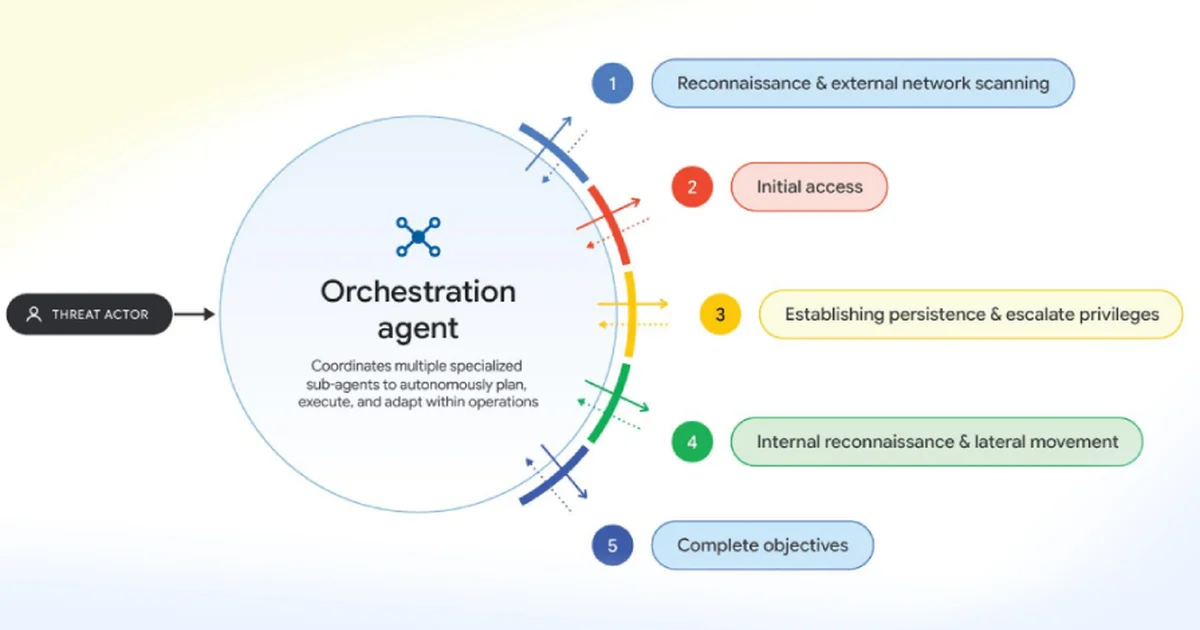
Google Threat Intelligence Group reported that attackers deployed a fully autonomous artificial intelligence framework to turn security patches into working exploits without human intervention. The system continuously compares application code before and after patch disclosures to draft and execute attacks.

Google says attackers are using large language models and AI agents to analyze patches and develop exploits faster. It has also observed groups experimenting with multi-agent tools that automate parts of an intrusion.

A critical security vulnerability in MongoDB servers can be exploited to crash database instances during failover events. The vendor has released emergency patches to address the issue.

Microsoft has released patches for 1,259 security vulnerabilities across its software portfolio, marking the second consecutive month patch volumes exceeded one thousand. The update addresses a moderate-severity Outlook flaw that is actively being exploited and threatens to expose authentication credentials.

The U.S. Cybersecurity and Infrastructure Security Agency added two security vulnerabilities affecting Cisco BroadWorks and Openwave systems to its catalog of known exploited flaws. Officials instructed government agencies to apply patches before late November 2026.

Google has rolled out an emergency security update addressing nine vulnerabilities in Chrome, including a dangerous memory flaw currently under active exploitation in the wild. This marks the eighth actively exploited zero-day vulnerability patched in the browser since the beginning of 2026.

Meta is planning to release the last OS update for its Quest 2 and Quest Pro VR headsets by March 2027, the company announced today. The last OS update for those devices is planned to be v213, and after that, Meta will continue to ship security patches and critical bug fixes through the end of 2027. Apps that support the Quest 2 or Quest Pro can also be submitted through December 2027, Meta says.

**MSI MPG 341CQR QD-OLED **Design and stand worth the price** If you have ever used MPG 341CQPX or MAG 341CQP, you will find the X36 familiar at first sight. It's still rough black plastic interspersed with glossy patches, the back has a scratched metal finish with a glossy logo in the middle, the screen border is thin and the body is surprisingly thin for a curved panel, only about 7 mm on both edges. Under the chin of the screen is a small strip containing the AI Care logo and sensor.

# The man behind the 'Internet rescue' from the PHP disaster Despite being a volunteer, Ondrej Sury played a key role in quickly deploying patches for two PHP2Shell vulnerabilities, which could cause the Internet to crash. "I once told some people, that the world has one expert who alone is responsible for most of the worldwide distribution of PHP. And if anything happens to this person, it's over.

Website admins, brace yourselves. Fixes for what are believed to be uncommonly severe vulnerabilities are scheduled to drop in a little more than 12 hours for PHP, a programming language that powers websites and Web applications everywhere. PHP maintainers said Monday that they planned to release patches for two vulnerabilities, both with severity ratings of 9.2 out of a possible 10.