AIINEWS

AIINEWS

Global intelligence on artificial intelligence and computing

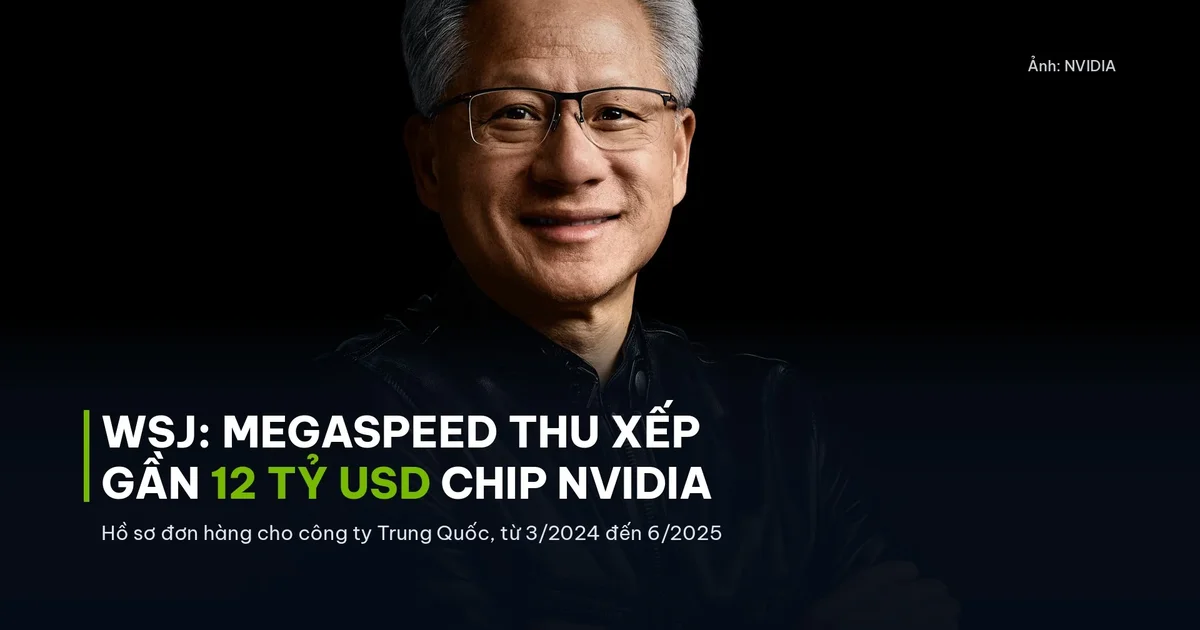
Megaspeed arranges nearly 12 billion USD in Nvidia chips for Chinese corporate clients
AIINEWS Editorial Board•hardware
16 November, 2026•2 min read
Megaspeed arranges nearly 12 billion USD in Nvidia chips for Chinese corporate clients

Executive Briefing

“Shipping records indicate Singapore-based cloud firm Megaspeed arranged high-end chip...”

Key Takeaways

  • 1.Between March 2024 and June 2025, Singapore-based cloud firm Megaspeed arranged nearly 12 billion USD in high-end Nvidia chips for Chinese entities.
  • 2.Shipping records note orders equivalent to hundreds of thousands of processors, but have not clarified the actual volume successfully delivered.
  • 3.According to industry insiders, Alibaba and ByteDance rank among the major clients for these intermediary entities.
  • 4.The US Department of Commerce is weighing new rules requiring export licenses for powerful chips to Malaysia, Indonesia, and Singapore.

Shipping records indicate Singapore-based cloud firm Megaspeed arranged high-end chip orders worth nearly 12 billion USD for Chinese enterprises. US and Southeast Asian authorities are currently tightening oversight of this hardware supply chain.

Key Developments and Technical Context

Between March 2024 and June 2025, Singapore-based cloud firm Megaspeed arranged nearly 12 billion USD in high-end Nvidia chips for Chinese entities.

Shipping records note orders equivalent to hundreds of thousands of processors, but have not clarified the actual volume successfully delivered.

According to industry insiders, Alibaba and ByteDance rank among the major clients for these intermediary entities.

The US Department of Commerce is weighing new rules requiring export licenses for powerful chips to Malaysia, Indonesia, and Singapore.

Strategic Analysis and Industry Implications

Surging computational demand from China is heavily driving data center investments across Southeast Asia, turning the region into a strategic transit hub.

Cross-border hardware supply routes face heightened regulatory bottlenecks as local governments ramp up inspections on equipment origins and destinations.

Outlook and Key Factors to Watch

The reports have not determined the exact quantity of chips and servers that have actually crossed borders to buyers.

The precise impact scope and enforcement timeline for new regulatory restrictions from US authorities remain unannounced.

Content and editorial synthesis copyright by AIINEWS Editorial Board
Share this intelligence report:
Expanded Perspectives & Intelligence

Related Dispatches & Deep Dives

Curated 8 specialized reports
6 insights from the GSA Women’s Leadership Initiative: AI semiconductor industry trends turn the chip race into a systems race

6 insights from the GSA Women’s Leadership Initiative: AI semiconductor industry trends turn the chip race into a systems race

### 6 insights from the GSA Women’s Leadership Initiative: AI semiconductor industry trends turn the chip race into a systems race For decades, the semiconductor industry competed on one thing: the individual chip. One of the biggest AI semiconductor industry trends now under way is the shift toward treating chips as components of much larger systems. Performance, cost and reliability are now determined across the package, the rack and the supply chain, not inside a single die.

7 min read6,688
Chinese company CXMT is about to produce advanced AI memory chips

Chinese company CXMT is about to produce advanced AI memory chips

# Chinese company CXMT is about to produce advanced AI memory chips "Chinese semiconductor star" CXMT is said to be early in producing HBM3E, an advanced high-bandwidth memory chip used in AI processors, despite the low rate of finished products. *Reuters* quoted a close source as saying that CXMT has sent the HBM3E model to a number of domestic AI chip designers and is expected to begin production in limited quantities in the next two months. However, the rate of finished products, that is, the rate of shipped chips that meet specifications, is only about 20-30%, much lower than the 70% of memory chip company SK Hynix (Korea).

4 min read7,345
More Performance From Every Byte: How Full-Stack Codesign Solves AI’s Memory Challenge

More Performance From Every Byte: How Full-Stack Codesign Solves AI’s Memory Challenge

Larger models, longer contexts and agentic applications are increasing GPU memory pressure while supply tightens and prices rise — a trend expected to continue through the near term. NVIDIA works closely with memory partners to rapidly adopt the latest memory technologies. NVIDIA was first to adopt HBM3e and HBM4 technologies into an accelerated computing stack.

7 min read7,445

Explore AIINEWS Intelligence Vault

Over 2,000 in-depth dispatches structured across 18 specialized tech & AI categories.

Browse all 18 categories