AWS proposes a COBOL step to check business rules when moving Assembler code to Java
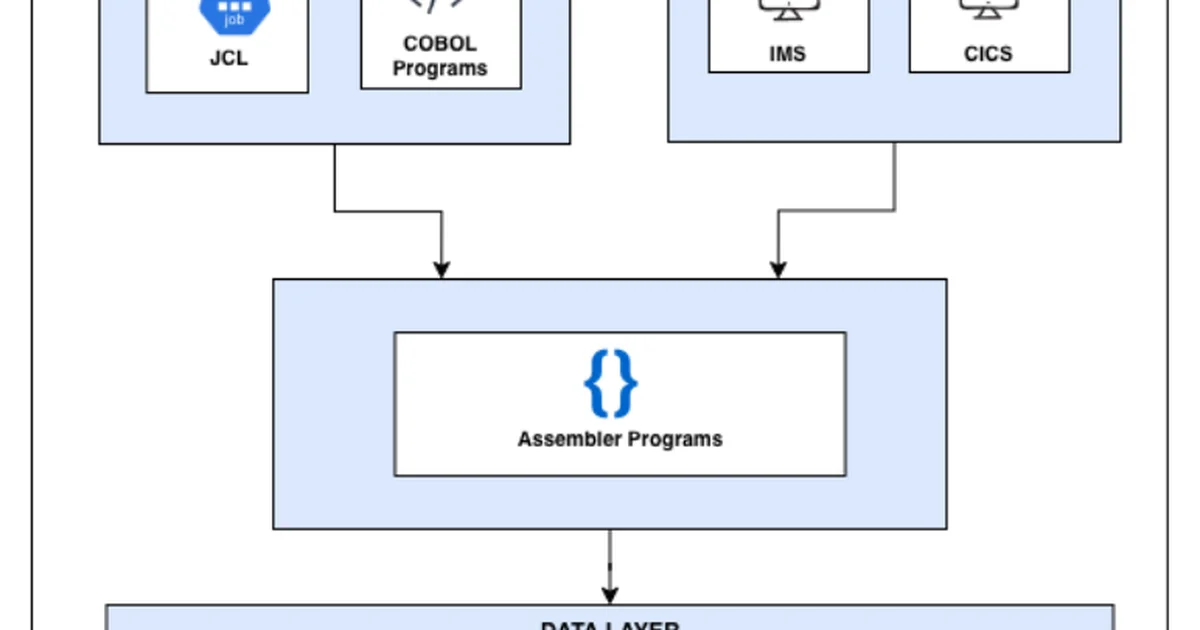
Executive Briefing
“AWS has outlined an AI-assisted process for moving mainframe Assembler applications to Java...”
Key Takeaways
- 1.In AWS’s proposed workflow, Amazon Bedrock and Kiro assist with Assembler analysis, business-rule extraction and specifications. AWS Transform handles the COBOL-to-Java conversion.
- 2.The team uses reviewed specifications to generate intermediate COBOL, then tests functional equivalence before proceeding to Java Spring Boot.
- 3.AWS says AI-generated business-rule documents should be treated as drafts. Domain specialists should validate the rules and resolve discrepancies before specifications are prepared.
- 4.The guide calls for source-code documentation, specialists to review the work, and test data with expected outputs for functional-equivalence checks.
AWS has outlined an AI-assisted process for moving mainframe Assembler applications to Java Spring Boot, using COBOL as an intermediate stage where specialists can check business rules. The post describes a method rather than presenting measured results from a deployment.
Key Developments and Technical Context
In AWS’s proposed workflow, Amazon Bedrock and Kiro assist with Assembler analysis, business-rule extraction and specifications. AWS Transform handles the COBOL-to-Java conversion.
The team uses reviewed specifications to generate intermediate COBOL, then tests functional equivalence before proceeding to Java Spring Boot.
AWS says AI-generated business-rule documents should be treated as drafts. Domain specialists should validate the rules and resolve discrepancies before specifications are prepared.
The guide calls for source-code documentation, specialists to review the work, and test data with expected outputs for functional-equivalence checks.
Strategic Analysis and Industry Implications
COBOL provides a review point before Java generation. If specialists find a misunderstood rule there, the team can correct the specification or intermediate code rather than trace the error after the full conversion.
The workflow’s value depends on documentation, specialist availability and test coverage. Multiple checkpoints alone do not establish that the final application behaves like the legacy system.
Outlook and Key Factors to Watch
The post provides no measured time, cost or defect results to substantiate improvements over manual conversion or a direct Assembler-to-Java approach.
It remains unclear how well the process works when programs lack documentation, test data or specialists who fully understand their business rules.