Google DeepMind reveals Gemini Robotics 2.5 to accelerate physical dexterity

Executive Briefing
“Google DeepMind has introduced Gemini Robotics 2.5, its newest vision-language-action model...”
Key Takeaways
- 1.Gemini Robotics 2.5 achieves a 30% to 100% higher success rate depending on the task type, while completing operations 20% to 30% faster than previous baselines.
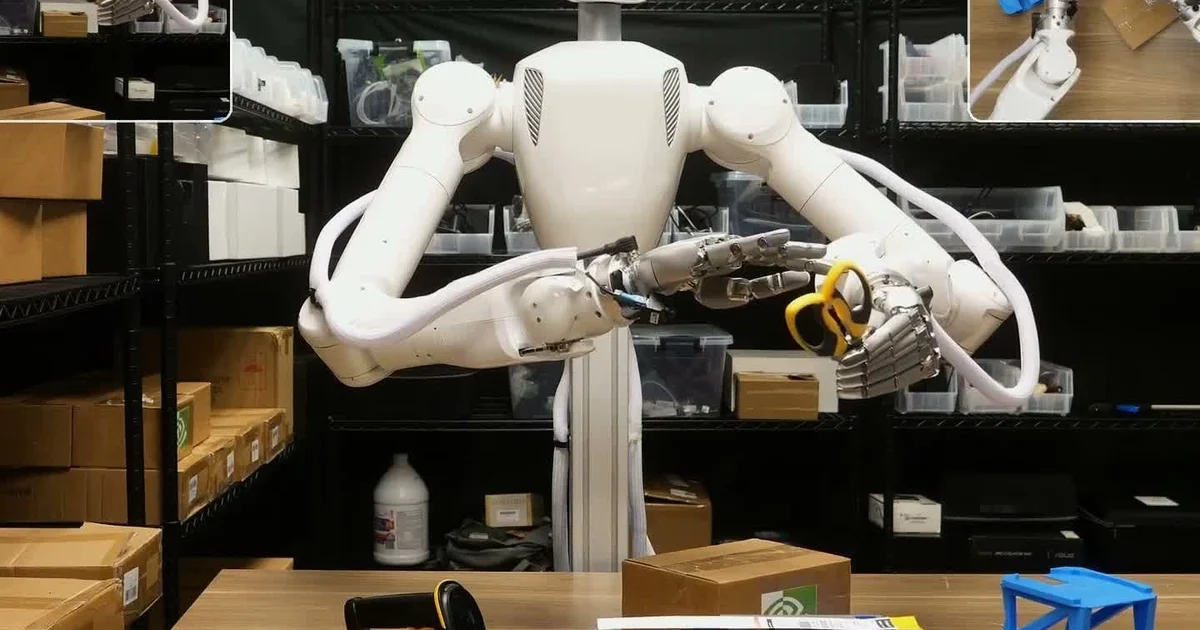
- 2.During a real-world proof-of-concept on Mercedes-Benz production lines, the models helped Apptronik’s Apollo 2 humanoid pick and pack automotive parts with a 96% success rate.
- 3.The system uses inference-time reasoning guidance to steer around physical hazards in real-time, boosting safe task completion around obstacles by 33% and around nearby people by 43%.
Google DeepMind has introduced Gemini Robotics 2.5, its newest vision-language-action model designed to improve task precision, execution speed, and operational safety for physical robots.
Key Developments and Technical Context
Gemini Robotics 2.5 achieves a 30% to 100% higher success rate depending on the task type, while completing operations 20% to 30% faster than previous baselines.
During a real-world proof-of-concept on Mercedes-Benz production lines, the models helped Apptronik’s Apollo 2 humanoid pick and pack automotive parts with a 96% success rate.
The system uses inference-time reasoning guidance to steer around physical hazards in real-time, boosting safe task completion around obstacles by 33% and around nearby people by 43%.
Strategic Analysis and Industry Implications
Combining embodied reasoning with direct action-control models demonstrates a clear commercialization pathway for humanoid robots deployed inside complex industrial manufacturing environments.
The simulation and digital-twin generation capabilities provided by Gemini 4 Argon help resolve training data bottlenecks, accelerating generalization capabilities for physical robots.
Outlook and Key Factors to Watch
The long-term commercial rollout scope beyond partner automotive factories has not been detailed in full.
The actual performance of the system when encountering unscripted anomalies outside the tested task categories remains unverified.