NVIDIA introduces GR00T 2 model for robots to learn new skills from human videos
Executive Briefing
“NVIDIA has introduced GR00T 2, a world action model that enables robots to learn skills by...”
Key Takeaways
- 1.GR00T 2 uses a diffusion transformer architecture to simultaneously predict future visual frames and generate robot control commands based on camera input and current state.
- 2.The model's training data includes over 400,000 hours of first-person human video alongside tens of thousands of hours of real robot control data.
- 3.In NVIDIA's internal tests, robots achieved a 95% success rate after being provided with 5 real-world demonstrations, though these figures have not been independently verified.
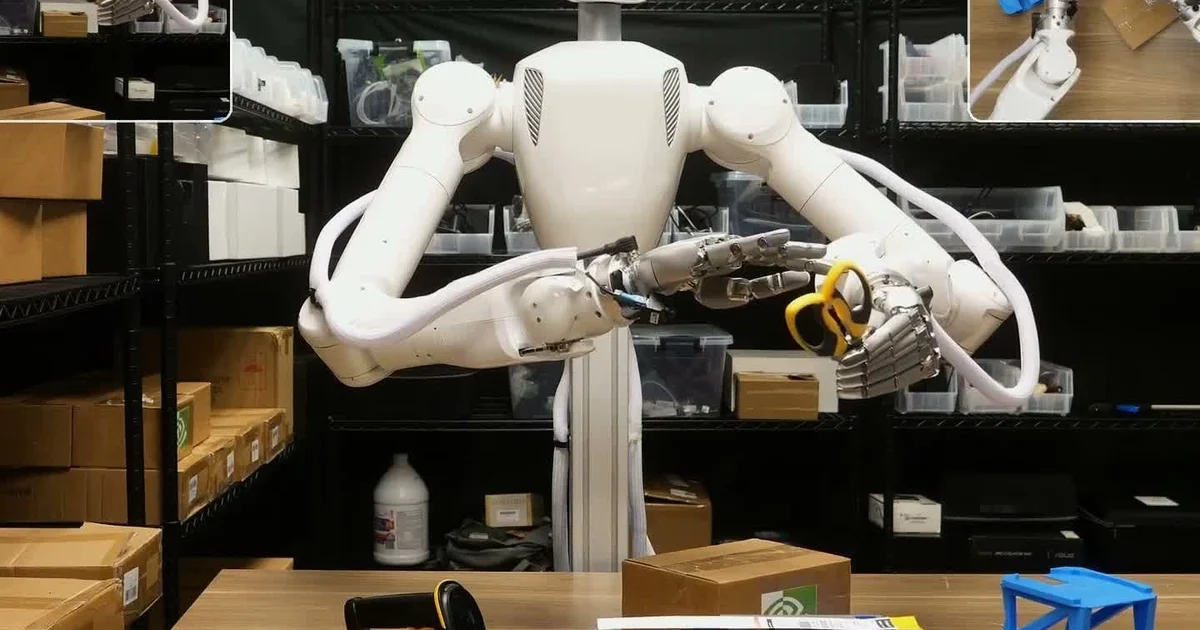
NVIDIA has introduced GR00T 2, a world action model that enables robots to learn skills by observing human work videos instead of just memorizing specific movements.
Key Developments and Technical Context
GR00T 2 uses a diffusion transformer architecture to simultaneously predict future visual frames and generate robot control commands based on camera input and current state.
The model's training data includes over 400,000 hours of first-person human video alongside tens of thousands of hours of real robot control data.
In NVIDIA's internal tests, robots achieved a 95% success rate after being provided with 5 real-world demonstrations, though these figures have not been independently verified.
Strategic Analysis and Industry Implications
The 'world action model' approach allows robots to understand the physical reactions of objects when manipulated, rather than just mechanically copying movements, which improves adaptability across different robot body types.
NVIDIA's release of 100,000 hours of video and the planned open-source release in December 2026 could lower the barrier to entry for smaller robotics research groups.
Outlook and Key Factors to Watch
The real-world reliability of GR00T 2 in industrial environments remains uncertain, as a 95% success rate in lab settings does not yet meet the strict stability requirements of production lines.
Specific licensing terms for the source code scheduled for release in late 2026 have not yet been disclosed.