Jensen Huang’s Vision for Europe Runs on Plug-In Data Centers
Executive Briefing
“At Nvidia’s GTC in Berlin, Huang unveiled the company’s new plug-in data center—the DSX Pod—as the k”
Key Takeaways
- 1.Jensen Huang’s Vision for Europe Runs on Plug-In Data Centers
- 2.System architecture and practical deployment considerations.
- 3.Performance evaluation and impact on the broader ecosystem.
Jensen Huang outlined his vision of Europe’s future at Nvidia’s global conference in Berlin on Wednesday. It consists of robotics, AI agents, and modular data centers, with Nvidia unsurprisingly powering it all.
“To be part of this AI economy, you don’t want to just be consuming the AI. You want to be producing the AI,” he told the 4,000-strong crowd at Nvidia’s GTC. “We can do all of that here in Europe.”
The last GTC, held in San Jose, California, in March, was all about AI inference and more efficient compute. Seven months later, the focus has switched to power, agents, and physical AI. There were even some cute little Microduck robots—made by recent Nvidia acquisition Hugging Face—doing Huang’s bidding at the end of his 90-minute pitch.
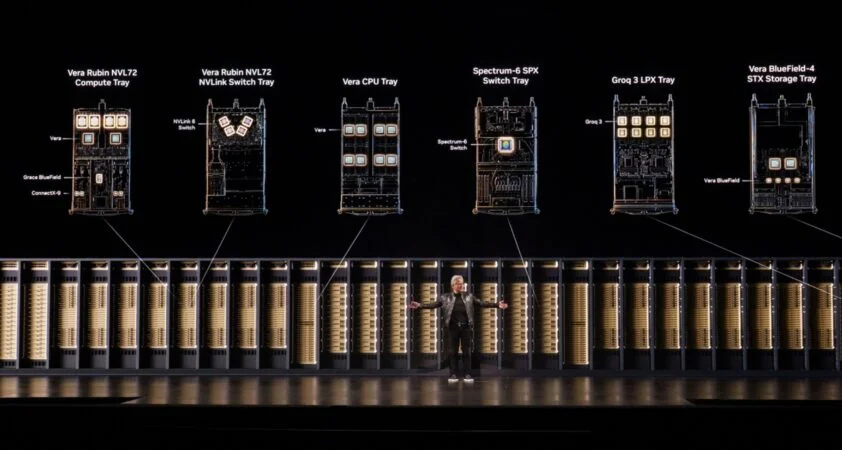
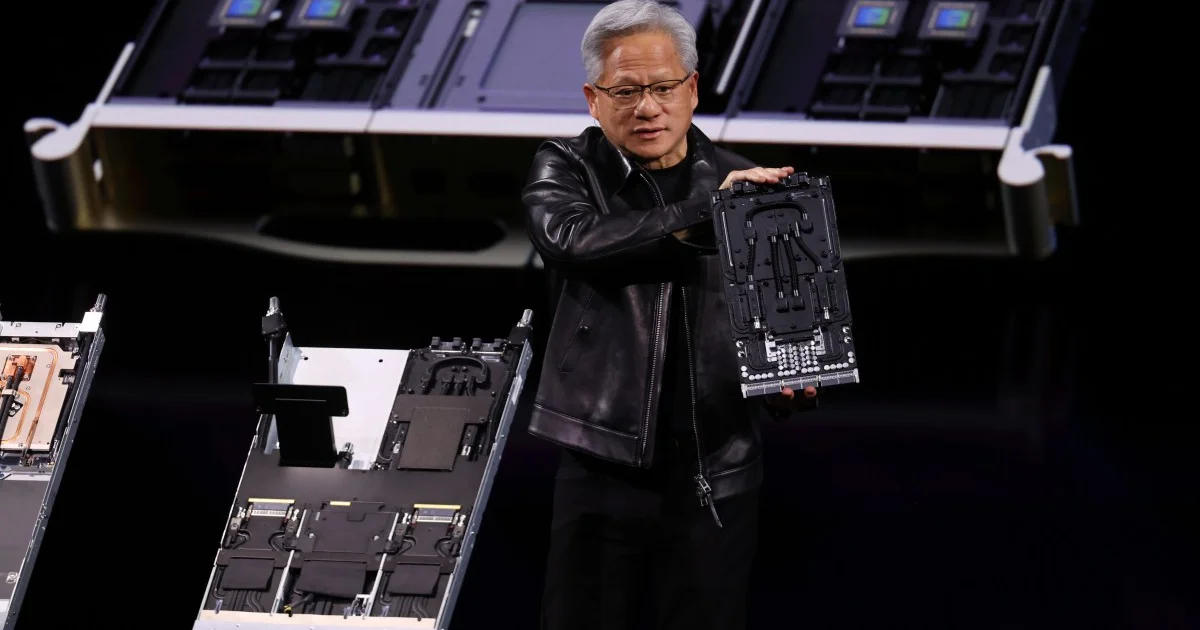
Huang’s first big announcement was a modular “AI factory” called the DSX Pod. It is a “plug-and-play” option for building AI data centers, with everything arriving already assembled in a large metal container and packed with Nvidia’s latest Vera Rubin compute racks. It can be brought online in 14 days, instead of taking months or years to construct. That may come in especially handy in Europe, where infrastructure projects are notoriously slow. Huang said the DSX Pod would also slash the amount of time compute sits idle in a data center as it will come online quicker. “This is a complete transformation,” he said.
The speech, delivered at Berlin’s Tempodrom, a venue inspired by a circus tent with the lighting of a gamer’s den, veered between selling laptops and sweeping predictions, with Nvidia presented as the fundamental technology provider to every industry. At one point, two Greenpeace protesters stood up and unfurled a banner reading “Clean up your dirty business.” Huang told his security team to “Go easy” as they were marched out.
Humanoid robotics will be the “next great industry,” Huang said, arguing that Europe was well-placed to lead on it due to its manufacturing heritage. But physical AI goes way beyond robotics, Huang pointed out, explaining that even telecom operators are adding Nvidia GPUs to their cell towers. He also announced partnerships with European carmakers VW and Mercedes on AVs.
Nvidia is making a similar move in humanoid robotics, with Huang announcing the launch of a full-stack robotics platform to standardize configuration. It also plans to release a preconfigured reference robot, Agile One, available in the first quarter of next year, to help developers start building physical AI systems. “This is your great opportunity,” he said.
On model usage, Huang predicted: “Every company in the future will use both closed models as well as open models that you customize.” He showcased Nvidia’s own open-source models as hitting frontier performance once customized on an organization’s proprietary data.
He also predicted that agents would mean there will be more users of software tools than ever before, and said agents’ reasoning, iteration, and tool use are pushing token consumption and demand for computing—and Nvidia GPUs—higher.
In case the 90-minute speech was too technical, it ended with an AI-generated Eurovision song summing up what Huang had just announced. The speech was easier to follow, to be fair.